
In brief
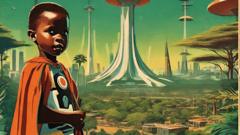
A recent art exhibition, Hakuna Utopia, showcases the vision of Kairos Futura, an art collective determined to transform Nairobi's socio-ecological landscape through creativity and community engagement.
Kairos Futura, an art collective in Nairobi, is on a mission to reshape perceptions of the city, notorious for its slums and ecological crises. Dubbed "the green city in the sun," Nairobi's juxtaposition of beauty and despair depends largely on one's viewpoint. While affluent neighborhoods may boast greenery, densely populated areas like Mathare are starkly contrasting, characterized by poverty and environmental degradation such as flooding and landslides. Kairos Futura is spearheading an artistic revolution with their latest exhibition, Hakuna Utopia, where seven artists delve deep into themes of resilience amidst adversity. Each artist’s work articulates a longing for utopia, reflecting the daily struggles faced by Nairobi’s bustling population of six million. One of the collective members, Stoneface Bombaa, who hails from Mathare, channels his experiences into art, hoping to spotlight the realities of slum life, where many lack basic needs like jobs, education, and even food.Bombaa articulates the frustration of his community, embroiled in a "hand-to-mouth economy." Driven by the need for positive expression, he envisions creating "micro-utopia" sites around the city, designed to reconnect individuals with nature—a vital aspect often absent in Mathare. Despite facing setbacks, including the demolition of a proposed site for his "jungle room," he remains resilient in guiding local children to Nairobi's beautiful parks, emphasizing the importance of green spaces for all, regardless of socio-economic status.The artists of Kairos Futura draw significant inspiration from the surrounding natural environment as they design imaginative solutions to pressing environmental issues. For instance, Coltrane McDowell looks to the structure of termite mounds in his architectural piece, Invisible Cities, rethinking what future urban design could entail. Another artist, Abdul Rop, reinforces the need for collective effort among Nairobians to realize their utopian aspirations, particularly amidst frustrations stemming from a corrupt political landscape.Rop highlights the recent activism by the younger generation, calling for changes in oppressive tax measures, which illustrates their eagerness for progress. He posits that art can serve as a medium for young people to envision and strive for a fairer future in Nairobi. "The moment to act for the future is now," he urges, advocating for bold and equitable dreams for the city.With works transforming the mundane, such as Ajax Axe's reimagined school chairs, the exhibition captures the essence of Nairobi's quest for a utopian identity, accentuating the transformative power of art and the unwavering spirit of its people.

