
In brief
From personal tragedy to political activism, Blouin's story is an inspiring narrative of resilience and advocacy against colonial rule.
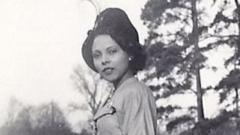
In the shadows of Africa’s independence narratives, Andrée Blouin stands out as a vital yet overlooked figure in the struggle against colonialism. Born in 1921 to a mixed-race family—her father a Frenchman and her mother from the Central African Republic—Blouin's early life was marked by complex cultural and social challenges. Her activism was ignited by personal loss when her son, René, died after being denied medical treatment because of his mixed heritage, transforming her grief into a powerful political consciousness.In her re-released autobiography, *My Country, Africa: Autobiography of the Black Pasionaria*, Blouin narrates her journey from an orphanage for mixed-race child to a significant player in the push for African independence. She grew up in colonial territories, witnessing firsthand the injustices of the system that marginalized individuals like her. Her formative years were spent in a convent in Brazzaville, where she faced a harsh upbringing that reinforced her resolve to challenge colonial norms.Blouin's path took a pivotal turn in 1958 when she moved to Guinea, caught in the political tempests of a country poised to assert its independence. Joining the struggle alongside the Rassemblement Démocratique Africain (RDA), she traversed Guinea to rally support against colonial powers, facilitating a successful vote for independence that ultimately made Sékou Touré the nation’s first president.Equipped with newfound prominence, Blouin soon became an influential advocate in the tumultuous political landscape of post-colonial Africa. She forged key alliances with prominent figures, collaborating closely with leaders such as Patrice Lumumba, the first Prime Minister of the Democratic Republic of Congo. Blouin’s charisma and strategic acumen earned her a prominent role in Lumumba’s government as his chief of protocol and speechwriter, gaining approval from the press who lauded her contributions to the cause.However, the era was fraught with challenges. As independence movements faced violent repercussions and international conspiracies, including Lumumba's subsequent assassination, Blouin's life spiraled into exile amidst political chaos. Forced to flee, she maintained her activism while battling the heavy toll of separation and loss, ultimately resettling in Paris yet continuing her struggle through journalism and advocacy.Blouin's later years were marred by disappointment as she witnessed the emerging leadership in Africa succumb to self-interest, leading her to question the true meaning of freedom. Despite her struggles with health and the impact of her activism being largely unrecognized during her lifetime, her legacy is now being reclaimed with renewed interest.Through vibrant discussion and educational initiatives at cultural centers honoring her contributions, Andrée Blouin’s journey inspires a new generation to rediscover their history and the unsung heroines of Africa’s independence. Her autobiography serves not just as a personal story but as a powerful reminder of the critical role of women in the fight against colonialism and for social justice. *My Country, Africa* is set for release on January 7 in the UK, inviting readers to explore the impactful life of a woman who embodied the strength and struggle of a generation.


