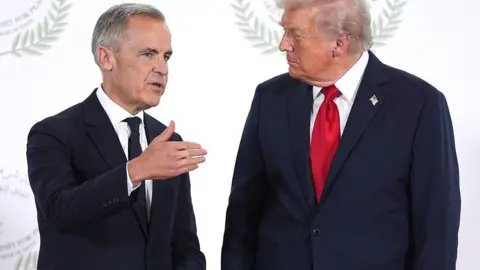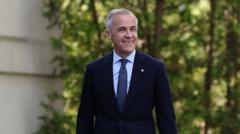
Canadian Prime Minister Mark Carney has introduced a revamped cabinet, signaling his determination to initiate "decisive action" on his economic agenda during a turbulent period marked by a trade war with the United States and President Donald Trump's critical stance on Canadian sovereignty. The newly appointed cabinet consists of 28 ministers and 10 secretaries of state, showcasing both continuity and change. During a press briefing, Carney described the team as “purpose-built for this hinge moment.”
Central to this cabinet reshuffle is the assignment of a new foreign minister to manage the delicate U.S.-Canada relationship. Carney’s strategic shift follows a recent meeting with Trump, where discussions hinted at a potential new trade deal. Long-serving MP Dominic LeBlanc transitions to lead Canada-U.S. trade efforts, focusing on dismantling internal trade barriers—a key issue during Carney’s campaign. Meanwhile, Toronto MP Maninder Sidhu steps into the role of international trade minister.
Carney has also appointed Anita Anand as the new foreign minister, bringing her previous experience from Trudeau's administration into this crucial position. In contrast, former foreign affairs minister Melanie Joly assumes responsibility for the industry portfolio, while Gary Anandasangaree takes charge of public safety, a department pivotal to border security—a focal point for Trump's tariff decisions.
Though some high-profile figures like Bill Blair and Jonathan Wilkinson have been removed from cabinet positions, new faces such as rookie MP Tim Hodgson, who will oversee natural resources, are introduced, adding fresh perspectives. The cabinet remains diverse, including representation from key regions in Canada and continuing a commitment to gender parity.
Notable members retaining their roles include Finance Minister Francois-Philippe Champagne and Deputy Prime Minister Chrystia Freeland, who continues to manage transportation. The new cabinet also addresses growing concerns from western provinces, responding to sentiments of alienation from the federal government.
Carney's decision to retain many previous ministers has drawn criticism from opposition leader Pierre Poilievre, who argues that these moves do not reflect the promised change. Meanwhile, Carney highlighted the urgency of ramping up housing construction, as Vancouver's former mayor, Gregor Robertson, takes a significant role in managing this ongoing crisis.
As Canada navigates this complex landscape, the newly appointed cabinet is expected to play an instrumental role in shaping the country's approach to its economic future and international relations.