
In brief
Cardinal Pablo Virgilio David shares personal reflections on his journey to the conclave and the ongoing struggles of the Catholic Church in addressing social inequalities and political controversies in the Philippines.
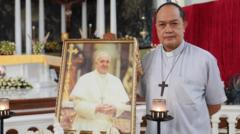
Not even in his wildest dreams did Cardinal Pablo Virgilio David expect to be elevated to cardinal. Speaking from his cathedral in Caloocan, he expressed his astonishment as he prepares to travel to Rome for the conclave, where he is one of three cardinals from the Philippines called to select the next Pope. Known affectionately as “Apu Ambo,” Cardinal David represents a connection to the grassroots, focusing his mission on advocating for urban slum dwellers in his impoverished diocese.Despite being a bishop for just five months after his elevation in December, Cardinal David embodies the legacy of Pope Francis, who aimed to draw the Catholic Church closer to everyday people. In a country where nearly 80% of the population identifies as Roman Catholic, the church faces challenges from political leaders questioning its doctrines on family planning and divorce, with new charismatic churches gaining popularity.Pope Francis's previous visit to the Philippines had uplifted local morale, but issues persist. Cardinal David stands out for his brave stance against former President Rodrigo Duterte's drug war, which claimed thousands of lives. He established memorials for victims like Kian Delos Santos, a teenage boy gunned down during police raids, and offered sanctuary to those fearful of being targeted. His outspoken critique of the drug war angered Duterte, leading to threats against his life, but he felt supported by Pope Francis during these trying times.Historical ties between the Catholic Church and political power in the Philippines have been complex. The church, once a major political force, faces a decline in influence, especially as societal issues such as family planning see legislation move forward despite ecclesiastical opposition. Some Filipino lawmakers stress that the church should not govern, framing their work as necessary for societal progress.Church attendance has dropped significantly, and many perceive a lack of action against scandals, including sexual abuse allegations, has damaged the institution's moral standing. Reflecting on the church’s approach, Cardinal David argues for humility and engagement with critics, echoing Pope Francis’s call to embrace vulnerability in leadership.As the conclave approaches, Cardinal David’s journey represents not just a personal triumph but a broader struggle for the Church as it navigates its role in a rapidly changing Philippine society, advocating for the disenfranchised while confronting its own challenges.


