
In brief
A heated online dispute among Trump allies, centered around the H-1B visa program for skilled foreign workers, reflects potential conflicts in the upcoming Trump administration. Prominent figures clash over immigration policies, showcasing divisions between traditional Republicans and far-right influencers.
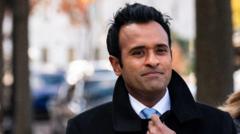
A recent debate ignited within Republican ranks regarding the H-1B visa program, integral for bringing skilled foreign workers to the United States. High-profile supporters of President-elect Donald Trump took to social media to voice clashing opinions, signaling potential discord within upcoming governmental plans. Vivek Ramaswamy, a Trump ally and advocate for reduced government spending, publicly defended the H-1B visa system on X, previously Twitter. His remarks included a critique of American parenting practices, arguing that a focus on cultural mediocrity detracts from economic competitiveness. Ramaswamy asserted that the integration of foreign workers equips the U.S. economy with necessary talents. Nevertheless, his statements met with severe criticism, particularly from factions within Trump's base who staunchly oppose immigration. Prominent Republicans engaged in the dialogue over the holidays, revealing a rift between mainstream party members and far-right influencers. Backing Ramaswamy's perspective, tech giant Elon Musk, who is slated to help lead Trump's "Department of Government Efficiency," agreed with the discourse on foreign talent enhancing American abilities. Ramaswamy stressed that American culture must shift its praises, suggesting too much emphasis is placed on superficial achievements over academic and technical excellence. Conversely, Nikki Haley, a former UN ambassador and presidential contender, articulated a contrasting viewpoint. She championed the abilities of American workers and labeled immigration a non-priority, insisting that efforts should be directed towards supporting citizens. Citing the number of individuals eager to immigrate to the U.S. as evidence of American worth, she rallied against Ramaswamy's opinions. Loomer, a controversial Trump supporter known for her far-right stance, led the charge against immigration policies, branding Indian immigrants as "invaders" and challenging the qualifications of Trump's advisors, specifically criticizing Sriram Krishnan, an India-born figure on the White House team. As tensions rose, Loomer accused Musk of censorship regarding her posts and asserted that Trump's allegiance to billionaires, like Musk, brings into question who truly represents the American citizenry. Musk responded by defending the visa program as a means of recruiting elite talent within engineering sectors. Despite the ongoing debate, a significant proportion of H-1B visas—73%—are issued to Indian nationals, raising questions about the fairness in hiring practices for U.S.-born workers. Though Trump has previously committed to mass deportations and criticized the H-1B program, his administration is expected to grapple with these intraparty differences once in office. Remaining adamant about his independence, Trump recently dismissed concerns regarding Musk's influence over his policies, clarifying that allegations of being under Musk's control were unfounded. With the arriving administration poised for turbulent interactions over immigration matters, the discourse surrounding H-1B visas could set the tone for future Republican unity.

