In a fascinating revelation, a study into the scents of ancient Egyptian mummies shows that these 5,000-year-old bodies surprisingly emit delightful odors. Researchers analyzed nine mummies and discovered that, despite variations in scent intensity, all shared common notes described as "woody", "spicy", and "sweet". This significant finding not only sheds light on ancient practices but also opens avenues for the public to experience these scents in Egypt's museums.
Cecilia Bembibre, one of the study’s authors, explained that the team aims to reconstruct the odors chemically and present them at the Egyptian Museum in Cairo, allowing visitors to gain a rich sensory experience from the mummification process. Historically, the mummification ritual incorporated pleasing fragrances that were believed to aid the spirit’s journey to the afterlife. Pharaohs and nobles were often preserved with a blend of oils, waxes, and balms, emphasizing the ancient Egyptians' appreciation for scent.
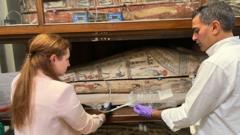
Interestingly, Dr. Bembibre noted that the unexpected pleasantness of these mummies sets a stark contrast to their depictions in popular media, where dreadful consequences follow interactions with their remains. The research findings, published in the Journal of the American Chemical Society, were achieved through careful techniques involving a tiny tube that allowed the scientists to measure the scents without damaging the mummies.
The duo of Bembibre and her colleagues, which includes Matija Strlič from the University of Ljubljana, believes that these scents could provide tangible insights into a mummy's social class, given the different embalming materials used for various societal levels. This innovative approach could redefine museum experiences, offering visitors an emotional and physical connection to historical practices.
Exploring with odor does not merely amplify the storytelling of ancient Egypt; it serves a critical role in mummy conservation strategies. Using gas chromatography, the research team identified specific odors resulting from the breakdown of animal fats employed in the embalming process. These findings promise to inform conservators on the best methods for storing and preserving mummified remains to protect these artifacts for future generations.
As discussions around scent and history deepen, the work of Bembibre and her collaborators shines a new light on the cultural significance of smells in ancient Egyptian life, and their innovative research could pave the way for similar projects in museums worldwide.
Cecilia Bembibre, one of the study’s authors, explained that the team aims to reconstruct the odors chemically and present them at the Egyptian Museum in Cairo, allowing visitors to gain a rich sensory experience from the mummification process. Historically, the mummification ritual incorporated pleasing fragrances that were believed to aid the spirit’s journey to the afterlife. Pharaohs and nobles were often preserved with a blend of oils, waxes, and balms, emphasizing the ancient Egyptians' appreciation for scent.
Interestingly, Dr. Bembibre noted that the unexpected pleasantness of these mummies sets a stark contrast to their depictions in popular media, where dreadful consequences follow interactions with their remains. The research findings, published in the Journal of the American Chemical Society, were achieved through careful techniques involving a tiny tube that allowed the scientists to measure the scents without damaging the mummies.
The duo of Bembibre and her colleagues, which includes Matija Strlič from the University of Ljubljana, believes that these scents could provide tangible insights into a mummy's social class, given the different embalming materials used for various societal levels. This innovative approach could redefine museum experiences, offering visitors an emotional and physical connection to historical practices.
Exploring with odor does not merely amplify the storytelling of ancient Egypt; it serves a critical role in mummy conservation strategies. Using gas chromatography, the research team identified specific odors resulting from the breakdown of animal fats employed in the embalming process. These findings promise to inform conservators on the best methods for storing and preserving mummified remains to protect these artifacts for future generations.
As discussions around scent and history deepen, the work of Bembibre and her collaborators shines a new light on the cultural significance of smells in ancient Egyptian life, and their innovative research could pave the way for similar projects in museums worldwide.