
In brief
This remarkable two-day journey, featuring careful planning and engineering, symbolizes the city of Kiruna's effort to preserve its heritage while addressing environmental challenges.
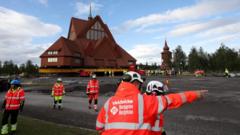
The entire town of Kiruna is participating in an extraordinary event as its iconic church embarks on a monumental two-day journey to a new location within the city, driven by the need to safeguard it from the dangers of ground subsidence caused by extensive iron ore mining. The impressive Kiruna Church, a striking red wooden structure built in 1912, is being moved over a distance of 5 kilometers (approximately 3 miles) with the aid of massive rolling platforms.The relocation, taking place at a cautious pace of up to 500 meters per hour, exemplifies the town's commitment to preserving its history while adapting to new realities. Kiruna's current city center faces risks from ground fissures, necessitating the strategic movement of some of its historical buildings towards a more stable area.Sofia Lagerlöf Määttä, a culture strategist involved in the planning, expressed a collective sigh of relief as the move commenced, stating, "It’s like finally, let’s get it done. We’ve been waiting for so many years." The meticulous preparations have been overseen by project manager Stefan Holmblad Johansson, who underscored the historic significance and complexity of the operation, emphasizing that "everything is under control."While past relocations in Kiruna often involved demolishing buildings, a collaborative effort ensured that significant structures, including the church, would be transported intact, highlighting a balance between heritage conservation and urban development.The church, recognized as Sweden's most beautiful building constructed before 1950, stands at 35 meters (115 feet) tall and weighs an impressive 672 tonnes. The undertaking has been made possible by the iron ore mining company LKAB, which is funding the entire project estimated at 10 billion Swedish krona (about $1 billion).One of the most crucial aspects of the move involves safeguarding the church's interior treasures. The altar painting, created by Prince Eugen of Sweden, remains secured with stabilization measures in place as the church is transported.Kiruna residents share a deep emotional connection to the church, with many recalling it as a center of spiritual life and a gathering space that has been integral to their community for generations. Vicar Lena Tjärnberg reflected on this sentiment, expressing a mix of gratitude and sorrow about the relocation but acknowledging the necessity rooted in Kiruna's mining context.As the church inched forward from its long-time location, a crowd of locals and dignitaries, including King Carl Gustaf of Sweden, lined the route to witness this unique event. The entire journey is being broadcast live on Swedish television, dubbed "slow TV," ensuring that this momentous occasion is not just a physical transfer but a celebration of Kiruna's resilience and adaptability in the face of change.
