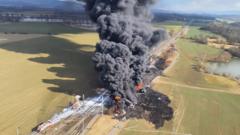
The train's derailment reportedly caused it to "split apart," igniting several tankers, with around 15 of the 17 benzene containers involved in the fire. The chemical, known for its carcinogenic properties, necessitated immediate precautionary measures, prompting local authorities to advise residents to remain indoors and avoid opening windows. Firefighters deployed heavy foam to contain the fire and prevent its spread, using helicopters and specialized monitoring units for safety assessments. While the flames wreaked havoc, officials assured that air pollution levels in the vicinity had not yet surpassed acceptable limits.
As fire crews worked tirelessly for hours to regain control, the Czech police announced that an investigation into the cause of the derailment was underway. Benzene is a flammable and swiftly evaporating substance used in various industrial applications, and exposure can lead to serious health complications. The event underlines the potential risks associated with transporting hazardous materials on railways, raising questions about safety protocols and emergency preparedness in the region.
As fire crews worked tirelessly for hours to regain control, the Czech police announced that an investigation into the cause of the derailment was underway. Benzene is a flammable and swiftly evaporating substance used in various industrial applications, and exposure can lead to serious health complications. The event underlines the potential risks associated with transporting hazardous materials on railways, raising questions about safety protocols and emergency preparedness in the region.