
In brief
The fentanyl crisis in the US is exacerbated by a complex supply chain involving Chinese precursor chemicals, Mexican production, and criminal networks that escape control. Despite measures taken, the opioid continues to flood in, leading to unprecedented overdose deaths.
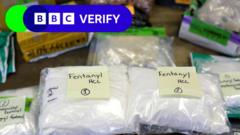
Fentanyl has gained notoriety as a leading cause of opioid overdose deaths in the United States, primarily due to the complex web of international trafficking that facilitates its entry into the country. Recent developments highlight the hefty tariffs imposed by former President Donald Trump on Chinese imports, attributing part of the crisis to China's failure to curb the export of fentanyl precursor chemicals.The opioid, initially approved for medical use as a potent painkiller in the 1960s, has since spiraled into a public health disaster, with the US Centers for Disease Control (CDC) reporting over 74,000 deaths related to fentanyl-laced drug mixtures in 2023 alone. Fentanyl, which can be deadly in doses as small as two milligrams, is often unknowingly consumed by users mixed with various illicit substances.Most fentanyl enters the US through Mexico, with US Customs and Border Protection (CBP) revealing that from September, 4,500 pounds (2,040kg) of fentanyl were seized, predominantly at the southwestern border with Mexico. Less than 1% resulted from shipments across the northern border with Canada. Mexican drug cartels play a crucial role in this illicit trade, with the infamous Sinaloa Cartel being a key actor in producing and distributing fentanyl.The supply chain begins with traffickers acquiring precursor chemicals in China, where despite some restrictions, many chemicals involved in fentanyl production remain unregulated. These chemicals are then processed in clandestine labs in Mexico before being smuggled into the US. Law enforcement indicates that in many cases, the Sinaloa Cartel employs sophisticated tactics to disguise shipments, often concealing them among legitimate commercial goods.Former President Trump accused the Mexican government of tacitly cooperating with drug trafficking organizations, a claim met with denial from Mexican officials. Following Trump’s tariff threats, significant fentanyl seizures were reported, marking a notable crackdown on this drug flow. However, observers note that the challenge is ongoing due to the evolving nature of the drug trade.Adding to the complexity, China has made significant moves to control the fentanyl trade itself over the years. However, some chemical manufacturers still engage in sales, aware they are facilitating illicit drug production, usually through encrypted platforms and cryptocurrency payments. While China remains the main source of fentanyl chemicals, the Drug Enforcement Administration (DEA) is increasingly identifying India as an emerging supplier, highlighting the global nature of the problem.Canada, while often overshadowed by Mexico in discussions about fentanyl trafficking, is also implicated in the crisis. While the majority of fentanyl seizures occur at the US-Mexico border, Canadian organized crime is increasingly involved in the production of fentanyl by importing necessary chemicals and equipment from China. In a recent shift, Canada committed C$1.3 billion ($900 million) to address the fentanyl crisis and enhance border security.In conclusion, the multifaceted nature of the fentanyl crisis illustrates an intricate global supply chain driven by demand in the US, necessitating a coordinated international response to effectively combat this public health emergency.
