In brief
Haiti continues to grapple with rampant gang violence, a turbulent political landscape, and worsening humanitarian conditions, leaving citizens and leaders searching for viable solutions.
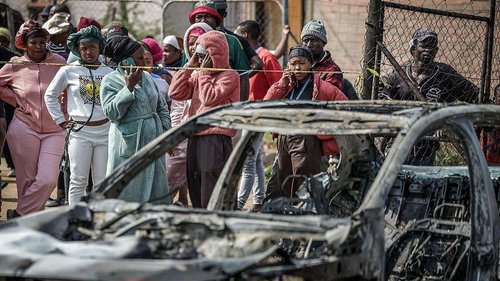
Haiti is currently engulfed in turmoil, marked by escalating gang violence, political strife, and humanitarian crises that demand urgent attention. The situation has only worsened in recent months, with the country witnessing the assassination of another prime minister, record-high murder rates, and significant displacement of its citizens.As the gang problem intensifies, a report indicates that over 4,000 deaths have been attributed to violence this year alone, with armed groups expanding their control over vast areas of Port-au-Prince and beyond. The chaos has closed the country's primary international airport on two occasions due to safety concerns, forcing the Federal Aviation Administration to restrict U.S. flights from operating at lower altitudes above Haitian airspace. Despite the allocation of approximately $600 million by Washington toward an international police force, the absence of effective governance has left the country in despair. With a new interim prime minister recently appointed, the struggle to rein in gang violence continues to pose a major threat to national stability."Everyone’s at a loss," said Susan D. Page, a University of Michigan Law professor and a former United Nations official who has worked extensively in Haiti. The nation has faced a long-standing crisis, driven by repeated cycles of humanitarian disasters, corruption, and ineffective foreign interventions spanning over a decade, exacerbated by a devastating earthquake and questionable electoral processes.As the international community and local leaders wrestle with these compounding challenges, the urgency for actionable solutions to restore peace and stability in Haiti has never been more pronounced.