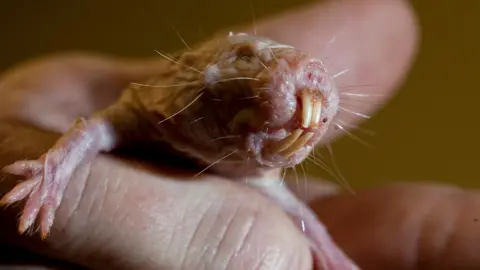
Naked mole rats are bizarre, bald, subterranean rodents that resemble sausages with teeth, and recent findings reveal a genetic secret to their long lives.
A study indicates that these fascinating creatures have developed a unique DNA repair mechanism that could be the key to their longevity.
With a lifespan of up to 40 years, naked mole rats are considered the longest-lived rodents in the world, outliving their relatives who typically last just three years.
The findings, published in the journal Science, also explore why naked mole rats exhibit resistance to various age-related diseases, including cancer and arthritis.
This research, spearheaded by Tonji University in Shanghai, China, focused on DNA repair—a crucial process initiated when DNA strands are damaged. The study particularly examined a protein involved in detecting and repairing this damage.
In humans, the cGAS protein interferes with DNA repair, which may promote cancer and shorten life spans. In contrast, naked mole rats utilize a similar protein that aids in mending DNA, preserving genetic integrity.
Professor Gabriel Balmus from the University of Cambridge remarked that this discovery is merely the tip of the iceberg in understanding the longevity of these remarkable animals, encouraging further exploration of their biology to derive insights for human health.
Balmus emphasized the potential for reverse-engineering the naked mole-rat's biological adaptations to develop therapies that could enhance quality of life as humans age. This research opens fundamental questions about evolution and genetic resilience, offering hope for future advancements in treating age-related conditions.