
In brief
The latest shift of the Doomsday Clock serves as a critical alarm for leaders worldwide, emphasizing the urgent need for action against growing nuclear threats, climate change, and emerging technologies.
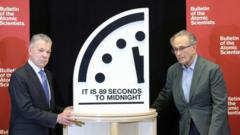
In a significant move reflecting escalating global tensions, the Doomsday Clock has been adjusted to 89 seconds before midnight, marking the closest it has ever been. This grim announcement was made by the Bulletin of the Atomic Scientists (BAS), which has been monitoring the clock since its inception in 1947. The decision to move the clock one second forward highlights grave concerns surrounding nuclear threats, the potential misuse of biological advances and artificial intelligence, and the ongoing climate crisis.According to Daniel Holz, chair of the BAS Science and Security Board, this adjustment serves as "a warning to all world leaders." Previously, the clock stood at 90 seconds to midnight in 2022, but the current shift indicates a pronounced sense of urgency in the fight against existential risks.The BAS, a Chicago-based non-profit organization, issued a statement declaring, "In setting the clock one second closer to midnight, we send a stark signal." The group elaborated that any delay in reversing the course towards catastrophe heightens the probability of global disaster. With the war in Ukraine approaching its third anniversary, the organization cautioned that the conflict could escalate to a nuclear scale due to hasty decisions or accidental triggers.Additionally, the statement pointed to tensions in the Middle East, warning that they could quickly spiral into a broader conflict. The panel of scientists expressed deep concern over inadequate governmental responses to the ongoing climate emergency, noting that many nations have failed to enact essential policies and funding initiatives to combat global warming.The BAS also highlighted the persistent threat posed by emerging and re-emerging diseases that jeopardize economies, societies, and overall security. Regarding technological advancements, particularly artificial intelligence, the organization indicated that military applications of AI are on the rise in various conflicts, further complicating global security dynamics.Another significant concern raised by the BAS is the role of misinformation and disinformation, which "degrade the communication ecosystem and blur the line between truth and falsehood," exacerbating these already perilous conditions.Ultimately, the bulletin emphasized that the United States, China, and Russia possess the collective capability to annihilate civilization and bear prime responsibility for steering the globe away from the brink of disaster.
