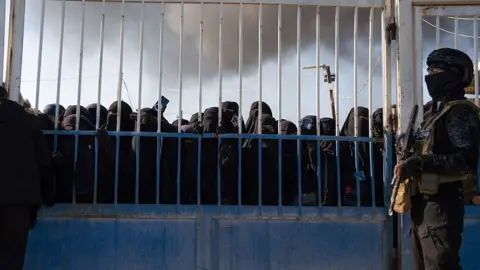
The United Nations (UN) has declared its intention to take over management of the Al-Hol camp in northeastern Syria, a facility holding thousands of people with alleged connections to the Islamic State (IS) group.
This development follows the withdrawal of Kurdish-led forces who had previously been managing the camp. Their retreat was prompted by the advancing forces of the Syrian government, resulting in significant unrest that disrupted humanitarian operations.
Reports indicated that residents attempted to breach camp perimeters, leading to unrest and subsequent looting of supplies.
A ceasefire agreement has shifted control of much of northeastern Syria back to the Damascus regime, marking the end of years of Kurdish governance.
During a briefing to the UN Security Council, UN official Edem Wosornu confirmed that the UN refugee agency, UNHCR, has now taken charge of camp management while working alongside Syrian authorities to reopen humanitarian access. However, conditions within the camp remain tense and volatile, according to UN spokesman Stéphane Dujarric, stressing that humanitarian efforts are currently halted due to the recent violence.
In a parallel effort, the U.S. has initiated operations to transfer up to 7,000 suspected IS fighters from prisons in northeastern Syria to locations in Iraq, confirming that 150 detainees have already been relocated across the border to a secure location. This move aims to mitigate regional security threats, as articulated by Iraqi authorities who state that all transferred individuals will face prosecution under Iraqi law.
Syrian ambassador to the UN Ibrahim Olabi expressed that the Syrian government supports U.S. actions in transferring IS detainees out of Syria. Meanwhile, human rights groups have voiced concerns about the potential for severe abuses faced by detainees. The Reprieve charity highlighted that British nationals, including minors, could be among those transferred, urging immediate intervention from the UK government.
The Kurdish-led Syrian Democratic Forces (SDF), along with both U.S. and UN entities, have repeatedly called for the repatriation of foreign IS suspects and their families from northeastern Syria, given the political instability and dire conditions of detention facilities.