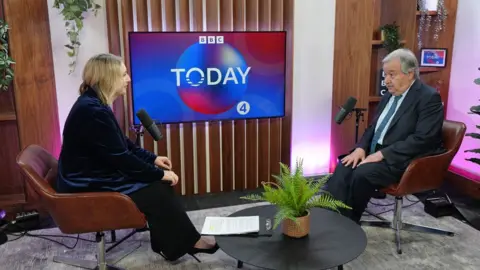
The US is acting with impunity and believes its power matters more than international law, the head of the UN has told the BBC.
Speaking to BBC Radio 4's Today programme, António Guterres said Washington's 'clear conviction' was that multilateral solutions were irrelevant.
What mattered, he continued, was the 'exercise of the power and influence of the United States and sometimes in this respect by the norms of international law'.
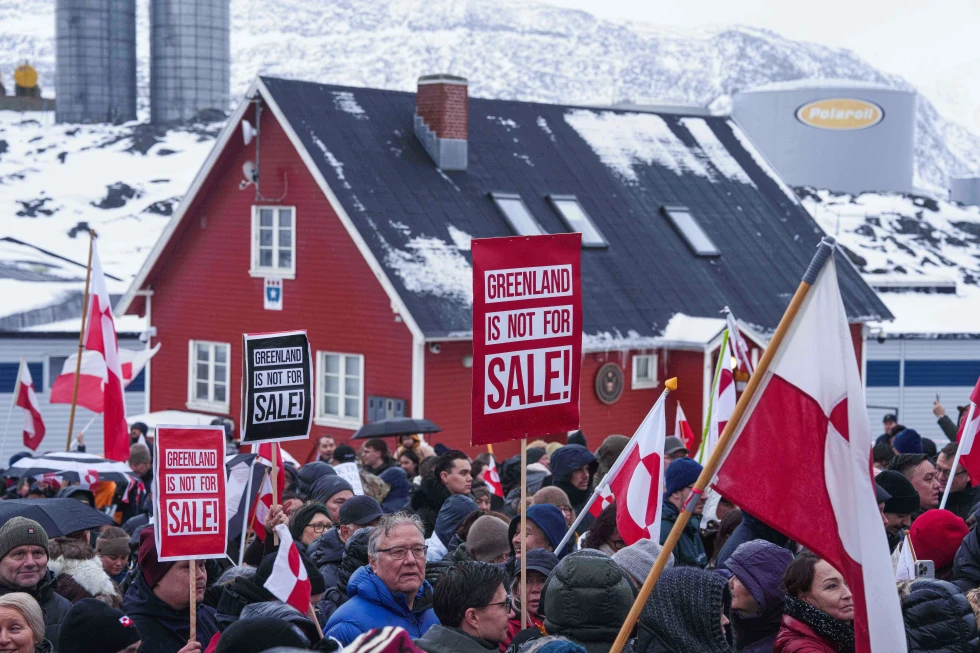
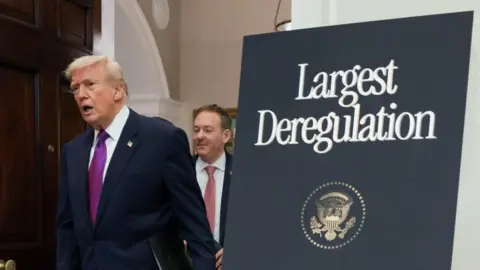
His comments come weeks after the US struck Venezuela and seized its president - and in the context of Donald Trump's repeated threats to annex Greenland.
Guterres said he believed the founding principles of the UN - including the equality of member states - were now under threat.
President Trump has previously been scathing in his criticism of the United Nations.
He used his address at last September's General Assembly to question its very purpose, claiming he had 'ended seven unendable wars' on his own and the UN 'did not even try to help in any of them'.
Presented with this damning assessment, Guterres admitted his organisation was struggling to make members abide by the international laws laid out in the UN Charter.
The UN was 'extremely engaged' in solving major global conflicts, he insisted. 'But the UN has no leverage - the big powers have stronger leverage.'
Guterres also said his organisation needed reform to tackle 'dramatic problems and challenges' facing its 193 members.
He suggested the UN Security Council - designed to maintain international peace and security - no longer represented the world and was 'ineffective'.
Any one of the council's permanent members - France, China, Russia, the UK or US - can currently veto resolutions. Both Russia and the US have used this power to frustrate global efforts to end the wars in Ukraine and Gaza.
Guterres claimed vetoes were being used to further individual members' interests, and criticized the fact that 'three European countries' were permanent members.
He called for changes to the council's composition - to 'regain legitimacy' and 'give voice to the whole world' - and to limit veto powers to avoid unacceptable 'blockages'.