
In brief
The recent earthquake in Myanmar has left Soe Nay Oo, a former imam, mourning the loss of approximately 170 members of his community, including family and friends. With the death toll exceeding 2,700, many were killed while praying in mosques, prompting deep sorrow and survivor's guilt for Nay Oo as he navigates his role as a human rights advocate from abroad.
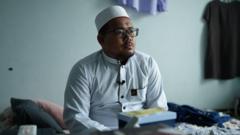
The call to prayer echoed eerily through the air in Sagaing, Myanmar, as hundreds of Muslims gathered at five mosques last Friday for their last Friday prayers of Ramadan. Just moments later, at 12:51 local time (06:21 GMT), an earthquake shook the region, collapsing three mosques — one of which was the prominent Myoma — and claiming the lives of nearly all those inside.Among the affected was Soe Nay Oo, a former imam who now resides in Mae Sot, Thailand. With a heavy heart, he learned that around 170 individuals from his close-knit Muslim community had perished, primarily within the mosques. “I think about all the people who lost their lives, and the victims' children… I can’t hold back my tears when I talk about this,” he shared with deep sorrow.The quake, which struck near Mandalay, claimed the lives of over 2,700 people, with rescue efforts ongoing to recover more bodies from the rubble. Eyewitness accounts reveal that many of the worshippers were caught off guard during prayers, and with estimates showing about 500 Muslims died inside their mosques, the scale of tragedy is overwhelming. As reports emerge from Sagaing, it appears that Myoma Street, where the mosques were located, sustained the worst damage, leading to the collapse of residences alongside the sacred buildings.The community is now facing dire challenges, as homelessness and food shortages grip those left standing. Survivors are seeking refuge on the streets, fearful of returning to their homes due to potential aftershocks. In Myoma alone, more than 60 individuals were crushed in the mosque collapse, and reports indicate that rescuers are still uncovering bodies.Soe Nay Oo, who left Myanmar following the 2021 coup, reflected on the profound loss of loved ones, including family members and community leaders. “This is the most painful thing that I have endured in my 13 years as an imam,” he lamented, recalling his wife’s cousin who had been a beacon of love for their family, highlighting the unbearable grief that accompanies such devastating events.He also mourned the loss of close friends, including his former assistant imam and a respected local school principal, expressing how the memories and contributions of these individuals continue to haunt him. “Every time I hear about another death in our community, it feels like a fresh wound… the loss is unbearable,” he stated.As religious observances have only deepened the sense of loss, Nay Oo expressed a belief that the departed have returned to God during this holy month: “They will be remembered as martyrs accordingly,” he noted. However, the practical aspects of burial are complicated as ongoing military clashes restrict access to Muslim cemeteries in Sagaing. As a result, bodies must be transported to Mandalay for burial, leaving families in a state of turmoil over the loss of customary rites.Survivors are facing immense emotional tolls and actively participating in rescue efforts despite their trauma. “They couldn’t even describe their loss in words when I speak to them,” Nay Oo commented, reflecting the deep struggles faced by those who remain.From his location in Thailand, Nay Oo feels the weight of survivor's guilt, wishing he could have been with his community during the quake to provide help and solace. His efforts to assist from abroad demonstrate the strong ties he maintains with those affected, as he coordinates with local contacts to deliver aid to the estimated 1,000 Muslims in desperate need of assistance.Amidst his work with a human rights group paused, Nay Oo continues to grapple with sleepless nights filled with worry for those back home, including his own siblings who remain unaccounted for. He expressed, “If I were still the imam, I would have gone with them… It’s painful to think about it.” With grief overwhelming him, Nay Oo is faced with the daunting reality of loss, grappling with the depth of his sorrow for a community shattered by an unimaginable tragedy.


