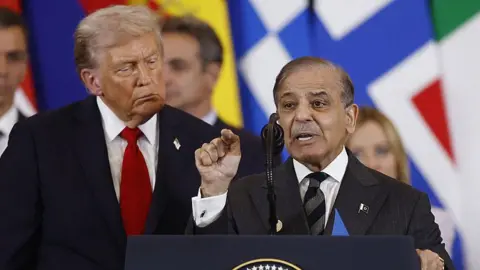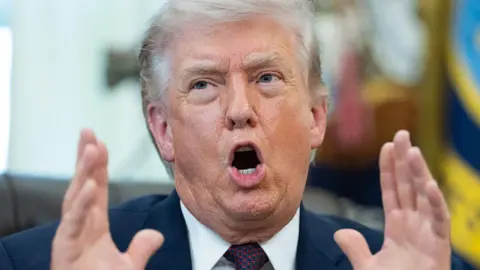
Across the world on Wednesday night, millions of people will tune in to watch Donald Trump deliver a primetime update on the war in Iran. Many will hope for some insight on how the war ends and what might come after.
The Trump administration has signalled there may be no big announcement, but many are wondering if his hastily-arranged remarks will mark the beginning of the end of the conflict or a potentially bloody escalation.
This ambiguity is, at least partly, by design. Trump often changes course or leaves his thinking a mystery to all but a small inner circle of supporters, which he has acknowledged leaves friend and foe alike wondering about his next move.
The president also knows that the address comes at a critical time in his presidency and amid mounting domestic pressure to find a way out of the conflict.
Poll after poll has shown that Americans have little appetite for a protracted conflict in Iran, particularly if it involves the prospect of US soldiers on Iranian soil.
A Reuters poll released this week found that two-thirds of Americans believe the US should work to swiftly wrap up its involvement in the war, even if the administration's stated military objectives are not fully accomplished.
Closer to home, many Americans are increasingly wary of higher prices at the petrol pump, which this week crossed the average of $4 a gallon for the first time in years. For a president who, pre-war, often pointed to lower petrol prices as a mark of success, this trend represents a challenge.
Imran Bayoumi, a geostrategy expert with the Atlantic Council in Washington DC, noted that the 'deep domestic unpopularity' of the war, along with economic fallout, poses a problem ahead of midterm elections if the conflict were to drag on.
The US president will likely present his view on how the conflict—or at least US involvement in it—will come to a close. This has shifted multiple times, from calls for an 'unconditional' Iranian surrender to a potential negotiated agreement. Just yesterday, he indicated that the war could end in 'two to three' weeks even without any deal.
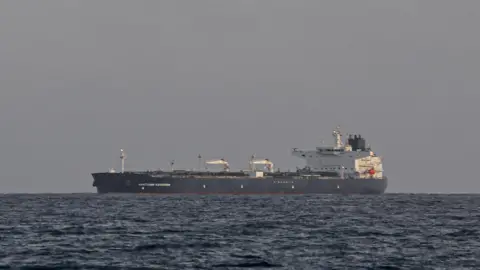
He also mentioned that Iran's president had requested a ceasefire, but the US would not accept it until the Strait of Hormuz is open, implying that the US's military operations could continue for an undefined duration.
The speech is expected to focus heavily on military successes, such as degrading Iran’s navy and missile capabilities. Trump is set to reiterate his belief that the operation will conclude soon, although what such a closure looks like remains undefined.
Analysts suggest that Trump's lack of clearly defined goals allows him to declare victory at any moment, despite uncertainty about the long-term implications for U.S. foreign policy and the stability of the region. Tonight's address will not only influence U.S. policy but could also impact international relations as allies and adversaries watch closely.
The Trump administration has signalled there may be no big announcement, but many are wondering if his hastily-arranged remarks will mark the beginning of the end of the conflict or a potentially bloody escalation.
This ambiguity is, at least partly, by design. Trump often changes course or leaves his thinking a mystery to all but a small inner circle of supporters, which he has acknowledged leaves friend and foe alike wondering about his next move.
The president also knows that the address comes at a critical time in his presidency and amid mounting domestic pressure to find a way out of the conflict.
Poll after poll has shown that Americans have little appetite for a protracted conflict in Iran, particularly if it involves the prospect of US soldiers on Iranian soil.
A Reuters poll released this week found that two-thirds of Americans believe the US should work to swiftly wrap up its involvement in the war, even if the administration's stated military objectives are not fully accomplished.
Closer to home, many Americans are increasingly wary of higher prices at the petrol pump, which this week crossed the average of $4 a gallon for the first time in years. For a president who, pre-war, often pointed to lower petrol prices as a mark of success, this trend represents a challenge.
Imran Bayoumi, a geostrategy expert with the Atlantic Council in Washington DC, noted that the 'deep domestic unpopularity' of the war, along with economic fallout, poses a problem ahead of midterm elections if the conflict were to drag on.
The US president will likely present his view on how the conflict—or at least US involvement in it—will come to a close. This has shifted multiple times, from calls for an 'unconditional' Iranian surrender to a potential negotiated agreement. Just yesterday, he indicated that the war could end in 'two to three' weeks even without any deal.
He also mentioned that Iran's president had requested a ceasefire, but the US would not accept it until the Strait of Hormuz is open, implying that the US's military operations could continue for an undefined duration.
The speech is expected to focus heavily on military successes, such as degrading Iran’s navy and missile capabilities. Trump is set to reiterate his belief that the operation will conclude soon, although what such a closure looks like remains undefined.
Analysts suggest that Trump's lack of clearly defined goals allows him to declare victory at any moment, despite uncertainty about the long-term implications for U.S. foreign policy and the stability of the region. Tonight's address will not only influence U.S. policy but could also impact international relations as allies and adversaries watch closely.