US President Donald Trump has announced there is a 'framework of a future deal with respect to Greenland'.
The statement came as a surprise after days of mounting tensions, culminating with a threat to impose economic sanctions on eight close US allies which have opposed his plans to seize the semi-autonomous territory of Denmark.
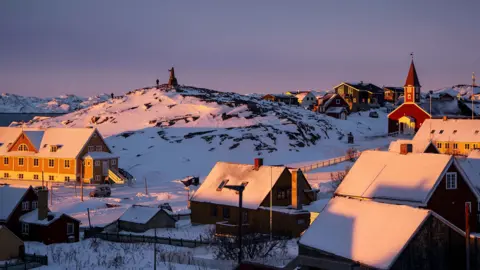
So what could this deal entail and will it be acceptable to Denmark and Greenland - both of which have made it clear they will not relinquish sovereignty of the world's largest island in the Arctic?
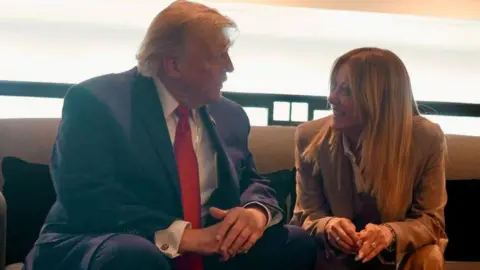
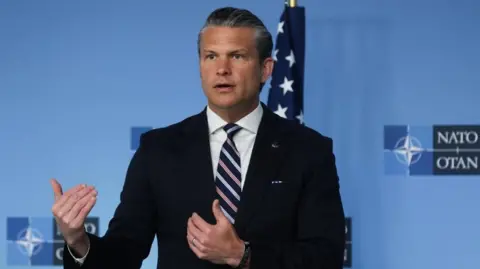
President Trump made the announcement on his Truth Social media platform on Wednesday, after talks at the World Economic Forum in Davos, Switzerland.
'Based upon a very productive meeting that I have had with the Secretary General of NATO, Mark Rutte, we have formed the framework of a future deal with respect to Greenland,' he said.
He did not give details, but said talks would continue to reach the deal.
Rutte, for his part, said he had not discussed the key issue of Danish sovereignty over Greenland in his meeting with Trump.
The view in Denmark is that the issue is far from over and that any agreement must still be hammered out together between Greenland, Denmark and the US.
Danish Prime Minister Mette Frederiksen said Danes could negotiate 'on everything political; security, investments, economy'.
'But we cannot negotiate on our sovereignty. I have been informed that this has not been the case either,' she said in a statement on Thursday.
Nearly 24 hours after Trump's announcement, Greenlandic Prime Minister Jens-Frederik Nielsen said he did not know the details of the deal being discussed, but was ready to negotiate a better partnership with the US. Sovereignty, however, was 'a red line'.
The New York Times, citing anonymous officials, said one idea under discussion was for Denmark to cede sovereignty over small areas of Greenland where the US would build military bases.
This arrangement would be similar to the status of two military bases in Cyprus, which are controlled by the UK.
However, both Denmark and Greenland have rejected relinquishing sovereignty.
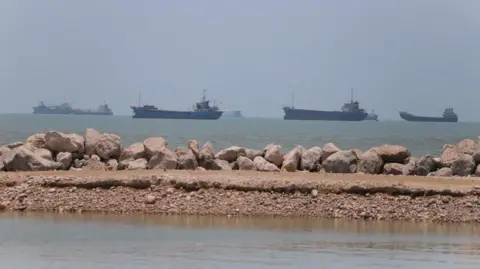
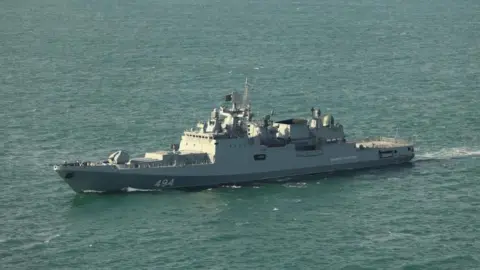
In arguing in favour of seizing Greenland, Trump has mentioned the threat of Chinese and Russian vessels around the island, even though Denmark says there is no threat 'today'.
On this point, Nato allies have tried to reassure the US that they will boost security in the Arctic, with Rutte noting that the framework deal would also require this contribution.
The US has had a military presence in Greenland since after World War Two, and discussions to reach a deal may centre on a renegotiation of the existing agreement.
However, all land in Greenland is public and cannot be bought or sold. The US does have military bases in many countries, but these do not constitute sovereign territory.
Trump's insistence on acquiring ownership, claiming that 'you defend ownership, you don't defend leases', indicates a complex negotiation may still lie ahead, especially with Denmark and Greenland’s firm stance on sovereignty.