In brief
President Donald Trump signed an executive order creating a 15% tariff and setting minimum import prices on polysilicon, a critical material for chips and solar panels. The move targets China’s near monopoly in polysilicon production and aims to shield U.S. manufacturers from growing competition. The Chinese embassy in Washington decried the policy as a serious trade disruption, vowing to protect its firms. Analysts view the tariff as part of a broader US strategy to curb China’s influence in key technology supply chains.
By Osmond Chia, Business reporter
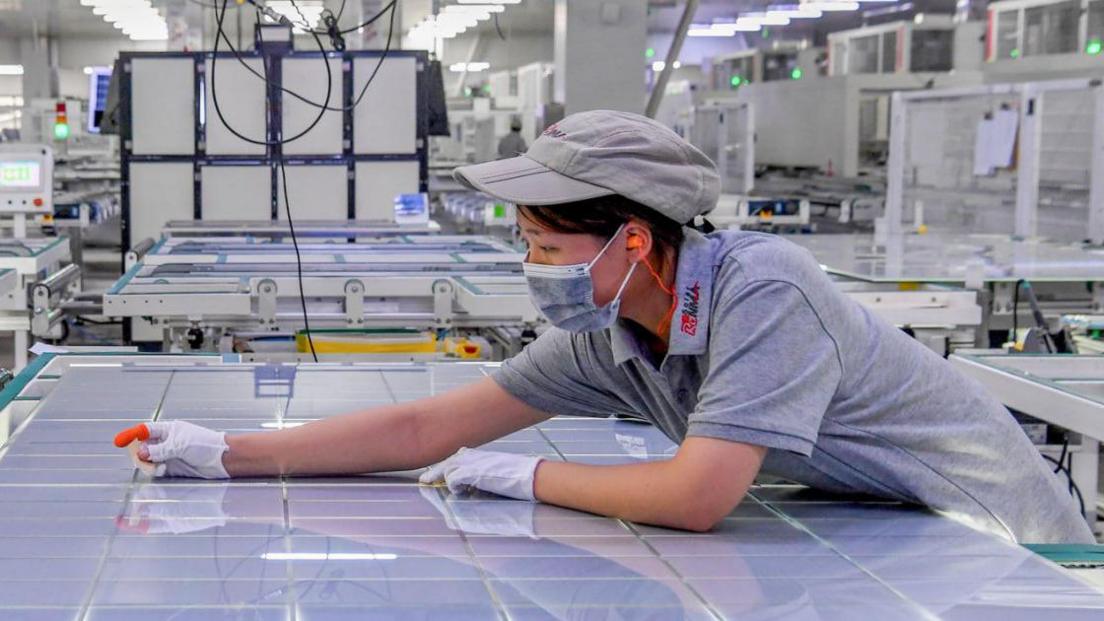
The U.S. President signed an executive order imposing a 15% tariff on polysilicon imports, a key material used in semiconductor and solar panel manufacturing.
The order also sets minimum import prices for polysilicon and related products, coming after a national security investigation into foreign production of the material.
The aim is to shield U.S. manufacturers from what Trump views as increasing Chinese competition, particularly in the chip industry, a major friction point between America and Beijing.
China’s embassy in Washington described the move as a serious trade disruption and stated that Beijing would take counter‑measures to defend its companies.
Trump noted that the U.S. share of global polysilicon production fell from 50% in 2005 to less than 2% in 2024, blaming foreign firms and underscoring the need for a protective tariff.
The tariff will take effect in December, with the administration offering incentives to boost domestic polysilicon production.
The policy is expected to benefit U.S. producers such as Hemlock Semiconductor and Wacker Chemie, the main domestic polysilicon manufacturers.
Polysilicon’s importance for military equipment and electronics ties the order to the broader U.S.-China race to lead in AI and advanced technology development.
Analysts and Chinese state media characterise the tariff as another escalation in Washington’s push to limit China’s role in critical technology supply chains.
Previously, the U.S. imposed restrictions on Chinese drones, humanoid robots and other tech products, while Beijing responded with tighter export controls on drones and a national security review of imported printers and copiers.