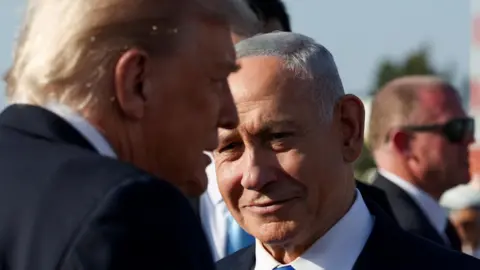
US President Donald Trump will turn his focus to the Middle East on Monday, as he hosts Israeli Prime Minister Benjamin Netanyahu in Florida for talks that are expected to cover Gaza and a range of other pressing issues. Any decisions made could have a potentially momentous impact on questions that determine the future of the region.
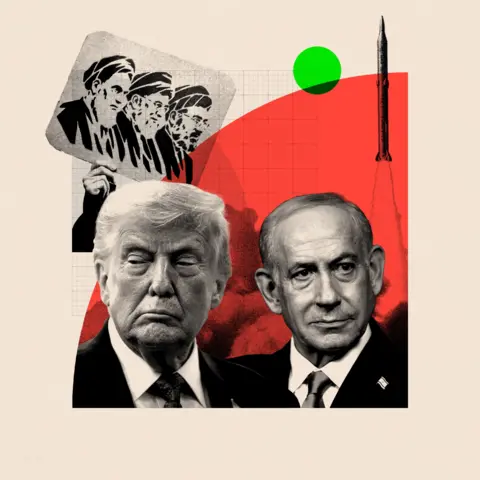
The US has been Israel's strongest military and political backer throughout two years of war in Gaza, and many are now looking to the meeting as a test of the leaders' relationship and how aligned they are on key topics. It will be their sixth meeting since Trump's return to office 11 months ago.
Among the expected points of discussion is the future of relations with Syria's new government, Iranian rearmament, and Hezbollah's role in Lebanon. Perhaps most critically, they will discuss the progress of the Gaza ceasefire deal, where Israel's government has taken several positions diverging from those of the US government.
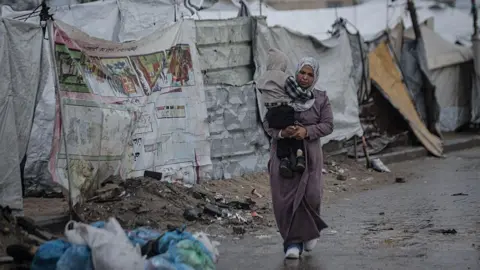
The talks will take place as storms continue to lash Gaza, where hundreds of thousands of displaced Palestinians remain living in basic tents that offer little protection from the cold and flooding. On Monday, the death of a two-month-old baby due to the severe cold was reported by the Hamas-run health ministry.
Recent winter weather in Gaza has reportedly caused 20 deaths due to the collapse of damaged buildings or exposure to cold. The Trump administration aims to see the ceasefire progress to its second phase in January, hoping to establish a Palestinian technocratic government, deploy an international security force, and begin the reconstruction of the devastated territory.
Critics suggest that Netanyahu may seek to delay the ceasefire progress, prioritizing the disarmament of Hamas before engaging with political futures for Palestinians. Both leaders will likely reassess the dynamics of Israeli settlements in the West Bank and the ongoing military strategies against Iran.
This meeting arrives during a turbulent period, with reports indicating that, since the ceasefire's enactment, over 414 Palestinians have been killed by Israeli military actions. Trump's mediation could profoundly influence the direction of these discussions and the broader geopolitical dynamics in the region.
The US has been Israel's strongest military and political backer throughout two years of war in Gaza, and many are now looking to the meeting as a test of the leaders' relationship and how aligned they are on key topics. It will be their sixth meeting since Trump's return to office 11 months ago.
Among the expected points of discussion is the future of relations with Syria's new government, Iranian rearmament, and Hezbollah's role in Lebanon. Perhaps most critically, they will discuss the progress of the Gaza ceasefire deal, where Israel's government has taken several positions diverging from those of the US government.
The talks will take place as storms continue to lash Gaza, where hundreds of thousands of displaced Palestinians remain living in basic tents that offer little protection from the cold and flooding. On Monday, the death of a two-month-old baby due to the severe cold was reported by the Hamas-run health ministry.
Recent winter weather in Gaza has reportedly caused 20 deaths due to the collapse of damaged buildings or exposure to cold. The Trump administration aims to see the ceasefire progress to its second phase in January, hoping to establish a Palestinian technocratic government, deploy an international security force, and begin the reconstruction of the devastated territory.
Critics suggest that Netanyahu may seek to delay the ceasefire progress, prioritizing the disarmament of Hamas before engaging with political futures for Palestinians. Both leaders will likely reassess the dynamics of Israeli settlements in the West Bank and the ongoing military strategies against Iran.
This meeting arrives during a turbulent period, with reports indicating that, since the ceasefire's enactment, over 414 Palestinians have been killed by Israeli military actions. Trump's mediation could profoundly influence the direction of these discussions and the broader geopolitical dynamics in the region.