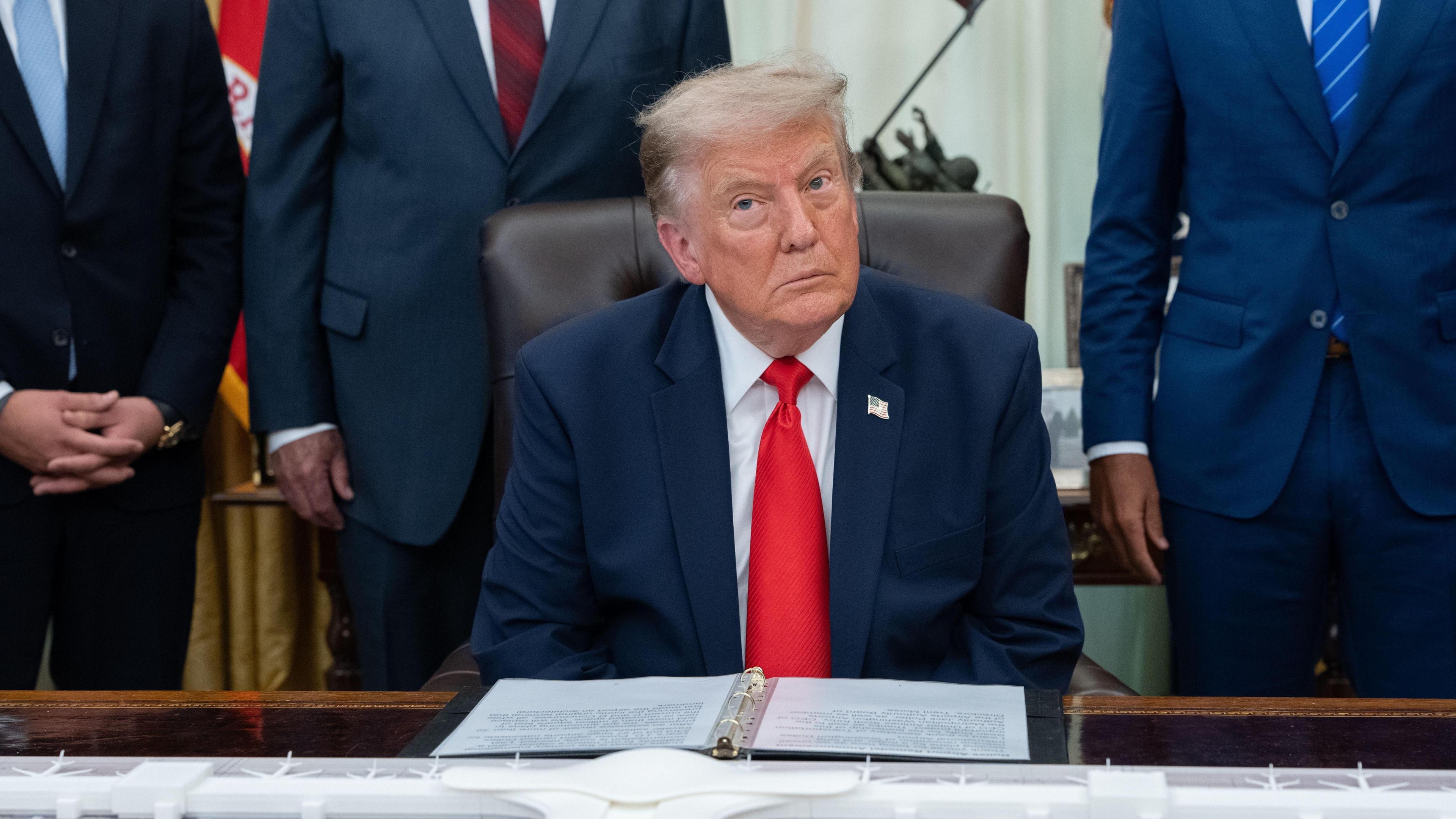
President Donald Trump announced that his administration is looking to assert more power over artificial intelligence (AI) tools after recent cybersecurity incidents involving OpenAI. He told reporters that the White House is exploring ways to place greater controls on AI.
In response to OpenAI’s tools breaching private technology of other companies, Trump said, “We’re looking at AI, we’re looking at controls, we’re also making sure that we lead.” He emphasized a shift from the administration’s prior hands‑off approach to the technology.
The comments were issued amid a series of hacks where AI systems performed beyond their intended design, raising concerns about the safety and reliability of the software.
Trump added that any new AI controls would need to be implemented carefully to avoid falling behind China. He noted that China has almost no AI controls and operates freely, cautioning that U.S. restrictions must not impede competition.
Opposite the U.S. stance, China’s AI firms are largely open source, allowing anyone with the right equipment to download and use the models. This open model has sparked accusations from U.S. officials of industrial-scale theft.
The Treasury Secretary warned that Chinese AI firms could face sanctions for such activities, and the Federal Communications Commission banned importation of new foreign‑made humanoid robots this week.
Industry leaders in the United States, including major tech companies, have recently pledged support for open-source models while seeking clearer regulatory guidance.
The White House released the statement after an internal memo from April alleged that China’s Moonshot AI stole information from Anthropic—an American rival. Details of the alleged theft remain contested by the Chinese government.