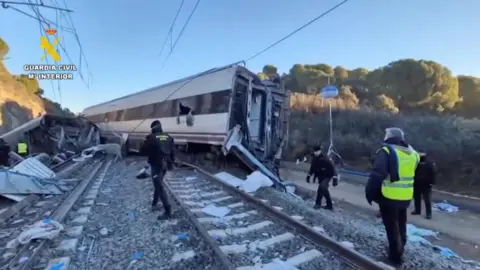
Spanish Prime Minister Pedro Sanchez has promised to get to the bottom of why two high-speed trains collided in southern Spain killing at least 40 people, as rescuers continue to search the wreckage.
After visiting the site of the crash, Sanchez also announced three days of national mourning for victims.
More than 120 people were injured as carriages on a Madrid-bound train derailed and crossed over to the opposite tracks, colliding with an oncoming train in Adamuz on Sunday evening.
The crash is the worst the country has seen in more than a decade.
Rail network operator Adif reported that the collision occurred at 19:45 local time on Sunday, shortly after one of the trains had departed from Málaga heading to Madrid. The train derailed on a straight stretch of track near Córdoba.
Transport Minister Óscar Puente stated the impact pushed the carriages of the second train into an embankment, and most victims were found in the front carriages of the train traveling south from Madrid.
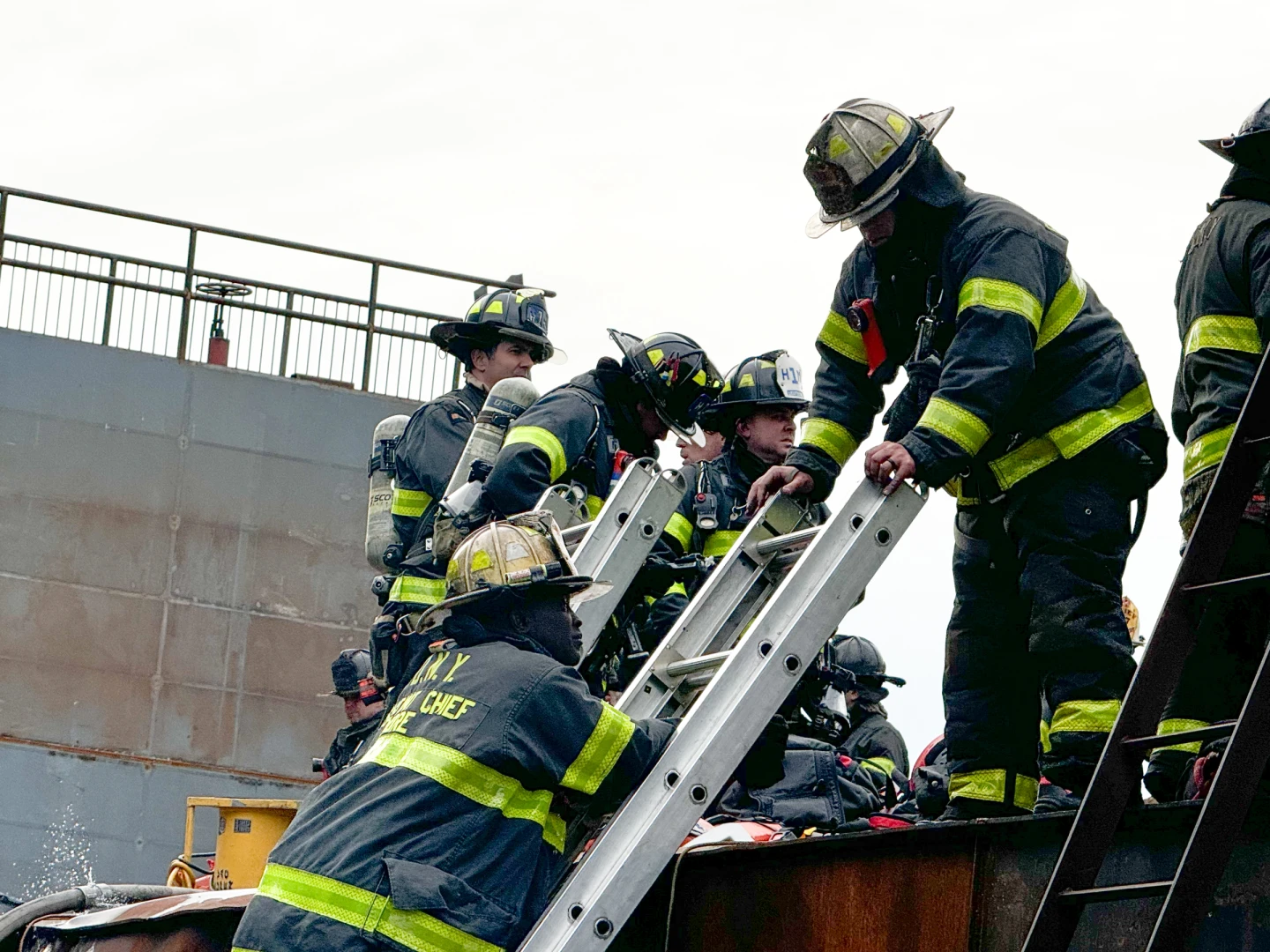
Rescue teams expressed difficulty in recovering individuals trapped within the twisted wreckage of the trains.
This is a day of sorrow for all of Spain, Sanchez said, asserting the government's full commitment to finding answers surrounding the cause of the tragedy.
According to initial assessments by experts, a faulty joint on the rails was found, which contributed to the widening gap between rail sections as trains passed over it. However, it remains unclear if this fault was a causative factor in the crash.
The passenger trains involved were reportedly capable of reaching speeds of up to 400 km/h (250 mph), raising concerns about safety and the infrastructure's integrity.
Emergency services have treated numerous individuals, with a significant number still in hospitals, including several in critical condition.
Spain's high-speed rail network is one of the most extensive globally, making this incident particularly alarming and provoking questions regarding safety regulations and operational protocols.