
In brief
In the wake of Ayatollah Ali Khamenei’s death during the US‑Israeli strike, more than 15 million people are expected to attend the six‑day funeral procession that will sweep Iran and Iraq. Large crowds gathered outside Tehran’s Grand Mosalla on the funeral’s first day, chanting slogans of revenge and solidarity. The coffin will be carried to Qom for prayers, then to Najaf, Karbala, and finally to the Imam Reza Shrine in Mashhad, where burial will take place. The event follows the mysterious disappearance of the new Supreme Leader, Mojtaba Khamenei, raising national speculation and unrest.
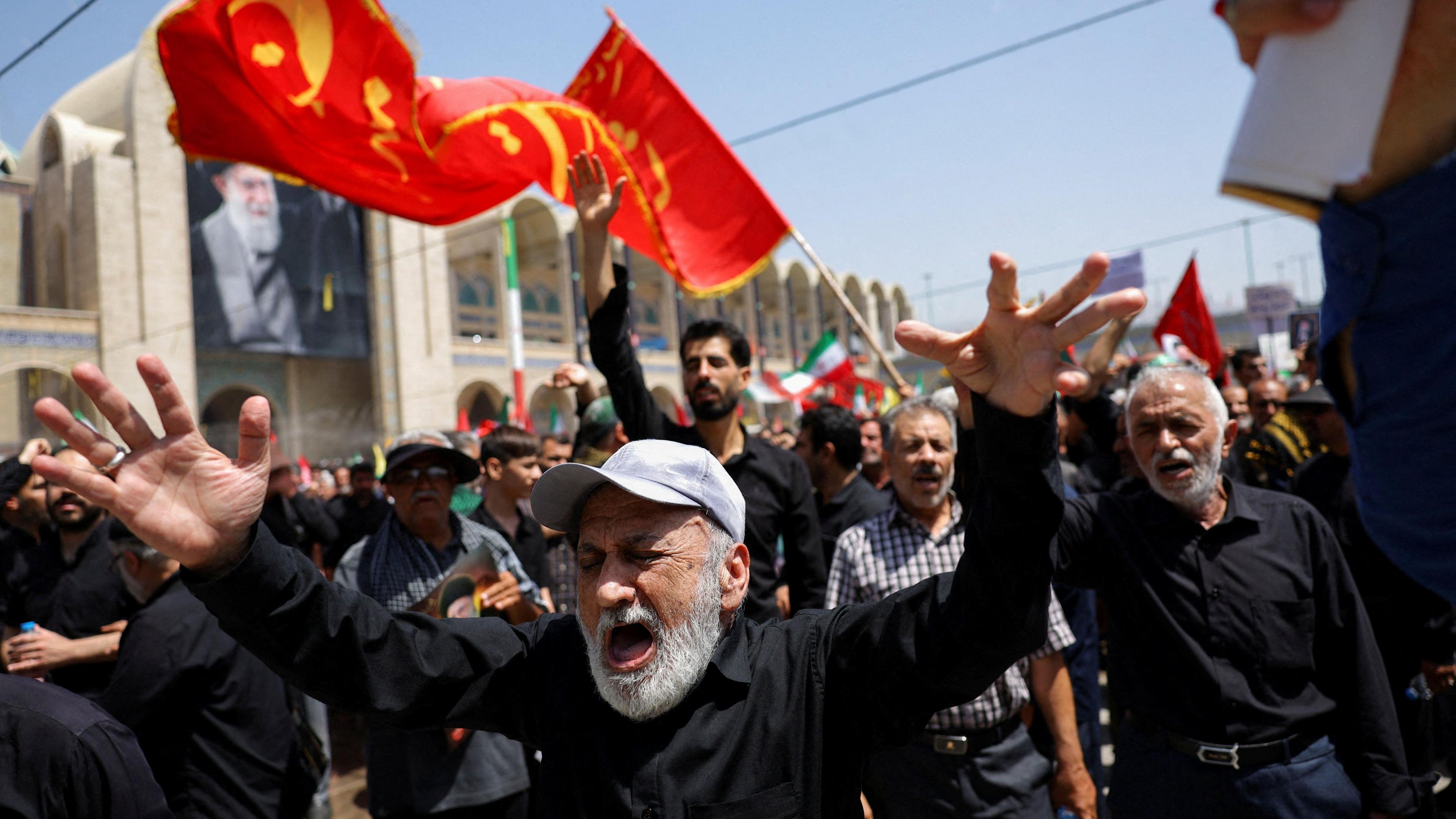
Large crowds of black‑clad mourners have gathered outside Tehran’s main mosque to pay their respects to Iran's former supreme leader on the first day of the funeral commemoration.
Khamenei’s body is lying in state at the Grand Mosalla, ahead of his eventual burial in Mashhad next Thursday. Authorities expect 15–20 million people to attend ceremonies across Iran and Iraq over the coming days, after the US‑Israeli strike that killed the ayatollah a little more than four months ago.
Masses of supporters of the Islamic regime turned out on Saturday morning, reportedly chanting slogans against the US and demanding revenge for the ayatollah’s killing. "We came to the funeral because we promised the supreme leader we would stand by him to the very end," told a 37‑year‑old professor to AFP.
"For a long time, we shouted that we would sacrifice our lives for the leader, but it was he who sacrificed himself for us," added another mourner.
Arash Rahimi, 40, told Reuters: "Everyone here has come to avenge the blood of our supreme leader. As our leader has said, we have a blood feud with the United States. Our relations with the United States will never be good."
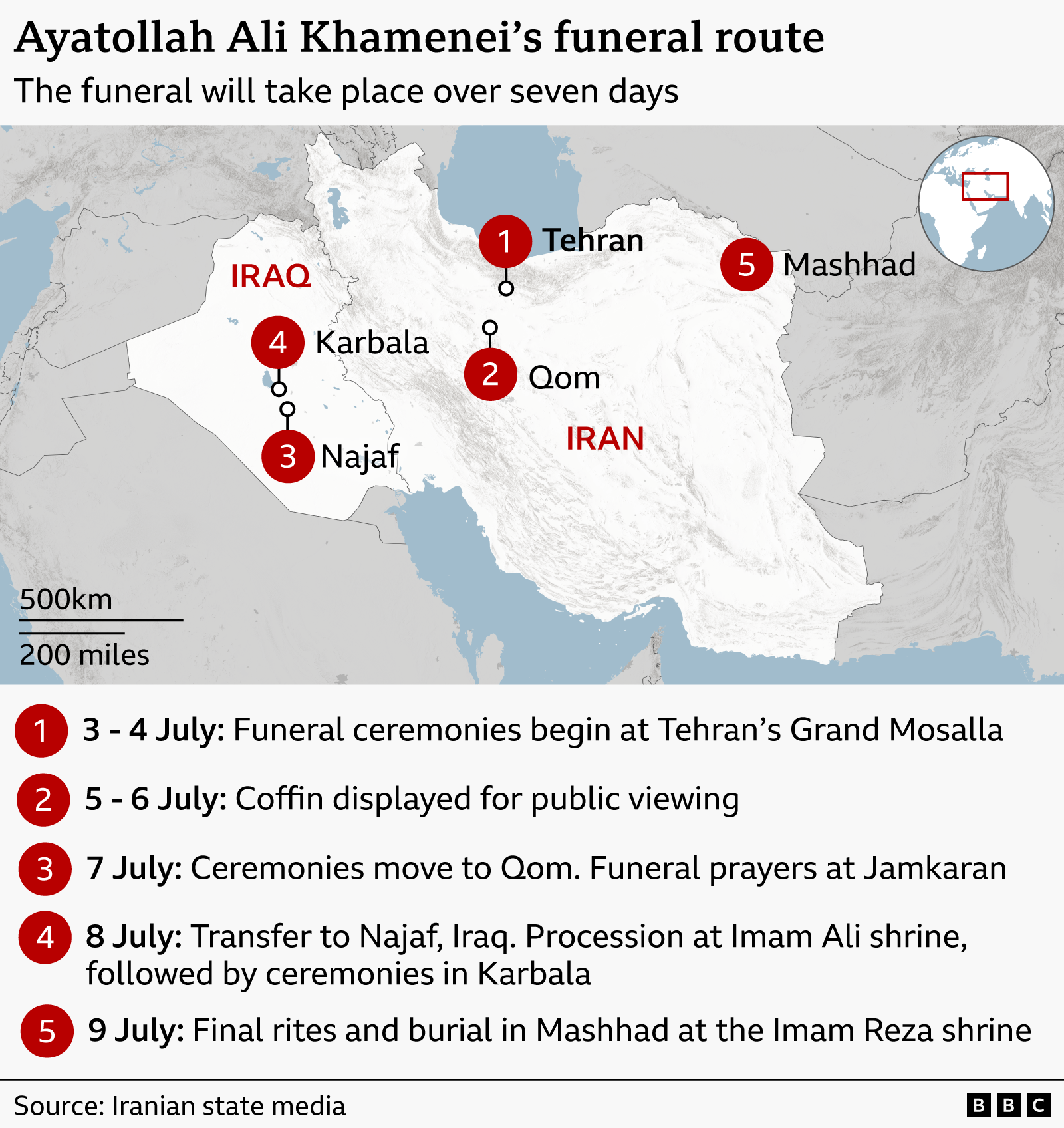
The funeral will see the coffin of Khamenei, alongside the remains of family members who also fell in the air strikes, pass through a series of sites: Qom, the holy shrine of Jamkaran, Najaf and Karbala in Iraq, and finally Mashhad for burial.
A map of the procession’s route shows key locations in Iran and Iraq where the celebrations will unfold.
Chinese recognise that the ceremony may also see the new Supreme Leader, Mojtaba Khamenei, still absent from public view, stirring debates about his health and presence at this historically charged event.
Beyond the six–day procession, additional commemorative arrangements are scheduled to span the next 40 days, culminating with events extending to the first anniversary of Khamenei’s burial.

