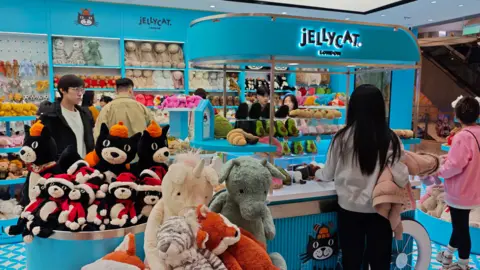
The Jellycat Phenomenon: How a Plush Toy Captured Hearts in China
Stella Huang, a buyer of Jellycat plushies, found her first toy during the pandemic after losing her job. Initially, drawn to the brand through a gingerbread house plushie she spotted on the Chinese social media platform RedNote, Stella's love for Jellycat went beyond mere nostalgia. Over the years, her collection grew to a staggering 120 toys, symbolizing emotional support in times of uncertainty. With prices exceeding $5,000, these plushies cater to China’s youth during a period marked by socio-economic challenges and emotional turmoil.
Initially aimed at children, Jellycat's plush toys have transformed into sources of comfort for young adults, as seen in the popularity of their Amuseables line, which features cute, characterful toys designed for a wide demographic. Experts attribute the brand’s success to its ability to cater to adult consumers looking for companionship amidst a rising sense of loneliness.
With the Chinese market embracing the trend of 'kidults', relaunched Jellycat products emphasized local flavors – including plushies of local delicacies – thereby enriching the customer experience. The brand's limited-edition strategies further amplified interest, turning collecting into a sought-after pursuit as fans engage in a treasure hunt for exclusive releases.
However, there are signs that Jellycat's reign may be dwindling. Social media discussions about the toys are reportedly diminishing, prompting some collectors to consider transitioning to other forms of collectibles. The ongoing economic struggles facing China’s youth create tension between luxuries, like high-end bags, and affordable comfort items like Jellycats, illustrating the complex dynamics of consumer behavior today.