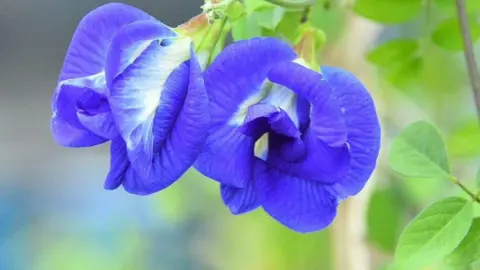
Until a few years ago, the butterfly pea flower was just another climbing plant in my village, says Nilam Brahma, who lives in Anthaigwlao, a village in the northeastern Indian state of Assam. Butterfly pea, also known as aparajita in India, grows as a vine and is characterized by its striking blue flower. Around two years ago, Brahma learned from local women that they were making money selling the flowers, which can be used to make tea or a natural blue dye. She decided to join them. The results surprised even me. The first time I earned $50 (£37) from selling dried flowers, I felt a shock. It made me believe I could control my own future, she says. This initial success led to the foundation of a small business. Brahma applied for a small loan, using the funds to invest in solar dryers which helped her to quickly dry flowers, preserving their vibrant color and ensuring they met quality standards for buyers.
Globally, there is a burgeoning demand for natural ingredients, particularly following the U.S. Food and Drug Administration's 2021 approval of butterfly pea flower as a food additive. However, the European Food Safety Authority raised safety concerns in 2022 about its use, classifying it as a 'novel' food that requires further approval. Despite these regulatory challenges, Indian entrepreneurs see this flower’s potential and are keen to develop a domestic market.
The crop is still seen as a backyard ornamental or medicinal plant rather than a commercial commodity, explains Varshika Reddy, founder of THS Impex, which exports natural dyes. She emphasizes the need for improved farming practices and a structured market awareness to assure farmers of their returns. Reddy collaborates with women farmers in Uttar Pradesh, providing them with formal contracts and agronomy support to enhance production standards.
Others, like Nitesh Singh from near Delhi, also recognize the commercial potential of the butterfly pea flower. He founded Blue Tea in 2018, aspiring to build an Indian brand using locally sourced butterfly peas. Initially, he had to import flowers due to inadequate local supply. However, after seven years of working with farmers, he now collaborates with 600 across India, focusing on improving flower quality and cultivating skills. Plucking flowers safely remains essential, typically a role fulfilled by women farmers due to their delicate handling abilities.
The butterfly pea flower is not only valued for its color but also for potential health benefits that are beginning to emerge from research. As public interest grows, farmers like Pushpal Biswas in West Bengal have reported success switching to butterfly pea cultivation. Growing this flower has allowed them to increase productivity and improve their economic circumstances. Biswas states, It’s an easy growing crop. Thanks to this, my production jumped from 50kg to 80kg, enabling me to take more land on lease. This movement has created a network of collaboration among local farmers, transforming their agricultural practices into thriving community businesses.
Globally, there is a burgeoning demand for natural ingredients, particularly following the U.S. Food and Drug Administration's 2021 approval of butterfly pea flower as a food additive. However, the European Food Safety Authority raised safety concerns in 2022 about its use, classifying it as a 'novel' food that requires further approval. Despite these regulatory challenges, Indian entrepreneurs see this flower’s potential and are keen to develop a domestic market.
The crop is still seen as a backyard ornamental or medicinal plant rather than a commercial commodity, explains Varshika Reddy, founder of THS Impex, which exports natural dyes. She emphasizes the need for improved farming practices and a structured market awareness to assure farmers of their returns. Reddy collaborates with women farmers in Uttar Pradesh, providing them with formal contracts and agronomy support to enhance production standards.
Others, like Nitesh Singh from near Delhi, also recognize the commercial potential of the butterfly pea flower. He founded Blue Tea in 2018, aspiring to build an Indian brand using locally sourced butterfly peas. Initially, he had to import flowers due to inadequate local supply. However, after seven years of working with farmers, he now collaborates with 600 across India, focusing on improving flower quality and cultivating skills. Plucking flowers safely remains essential, typically a role fulfilled by women farmers due to their delicate handling abilities.
The butterfly pea flower is not only valued for its color but also for potential health benefits that are beginning to emerge from research. As public interest grows, farmers like Pushpal Biswas in West Bengal have reported success switching to butterfly pea cultivation. Growing this flower has allowed them to increase productivity and improve their economic circumstances. Biswas states, It’s an easy growing crop. Thanks to this, my production jumped from 50kg to 80kg, enabling me to take more land on lease. This movement has created a network of collaboration among local farmers, transforming their agricultural practices into thriving community businesses.