
In brief
As Gaza grapples with the aftermath of a prolonged conflict, reports indicate thousands are unaccounted for beneath rubble, while aid efforts struggle to keep pace with overwhelming need. Citizens reflect on immense loss and the arduous journey ahead to rebuild lives and communities.
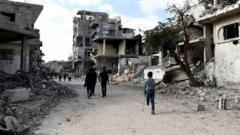
On the first full day following the ceasefire in Gaza on Monday, rescue workers and civilians faced the overwhelming reality of devastation left in the wake of 15 months of conflict. The Gaza Civil Defence agency estimates that over 10,000 bodies may still lie beneath the rubble of destroyed structures. Spokesman Mahmoud Basal advised the BBC that while they anticipated a recovery timeline of around 100 days, a shortage of equipment such as bulldozers could significantly delay operations.Photographs emerging from Gaza depicted a landscape utterly changed by the Israeli offensive, particularly in the northern sectors, with the UN estimating that 60% of buildings have been either damaged or obliterated. Although the sound of bombings ceased and celebrations erupted with the onset of a ceasefire on Sunday, life for residents remains dire and filled with uncertainty.The UN World Food Programme (WFP) highlighted that the war has rendered over two million residents homeless and completely reliant on food assistance for survival. Following the truce, aid began flowing into Gaza, with at least 630 trucks arriving immediately after the ceasefire, and another 915 entering the enclave the next day – the largest influx since hostilities began.Sam Rose, acting director of the UN's Palestinian refugee agency, emphasized that aid must address more than just immediate needs like food and healthcare; the broader scope of rebuilding lives, communities, and infrastructure must also be a priority. "The trauma, the suffering, the loss, the grief—this is going to be a very, very long road," he noted.In Israel, families of three hostages freed during initial exchanges expressed relief and gratitude, as their loved ones despite trauma, found themselves reunited. If the ceasefire remains stable, future releases of hostages are anticipated, bolstering hopes for renewed negotiations.Palestinian health officials report that more than 46,900 individuals have perished during the ongoing conflict, with an estimated 110,700 injured, a figure that many believe may severely understate the true scale of loss. The Gaza Civil Defence agency revealed that nearly half of their personnel have been affected by the conflict, which has severely impaired their operational capacity.However, as new challenges emerge in the form of recovery efforts, tales of personal loss resonate deeply among residents. Recent graduate Malaak Kasab lamented her family’s losses, noting the desperation faced by families striving for information about missing loved ones trapped under debris. "There are a lot of people under the rubble—everybody knows about this," she stated.The risk remains that the fragile ceasefire may falter as the Israeli military begins withdrawing from conflict zones, with both sides expressing apprehension regarding future escalations. In discussions at the UN Security Council, Secretary-General Antonio Guterres commended the ceasefire as a "ray of hope," while cautioning against potential violations of international law.With anguish still palpable amid newfound hope, Gazans are poised to navigate a tumultuous path toward healing and reconstruction, eager to reclaim their lives from the ruins of war.


