
In brief
The installation of bird detection cameras and thermal imaging radars aims to prevent future incidents.
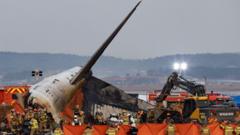
In a significant move to bolster aviation safety, the South Korean government has mandated the installation of bird detection cameras and thermal imaging radars at all its airports by 2026. This decision comes in the wake of a catastrophic accident in December that resulted in the death of 179 individuals, marking it as the deadliest air crash on South Korean soil.The preliminary investigation revealed that a bird strike on a Boeing 737-800 plane was a critical factor, with feathers and blood stains found on both engines. As investigations continue, authorities are also scrutinizing a concrete structure located at the end of the runway, which the aircraft crashed into during an emergency landing.The Ministry of Land announced on Thursday that new bird detection radars would be employed at all airports to enhance early-warning systems for incoming birds. Such technology works by monitoring the size and movement of birds and transmitting this data to air traffic controllers, thereby greatly improving response times for aircraft approaching landing.Currently, only four South Korean airports feature thermal imaging cameras, and it remains unclear how many have installed bird detection systems. To further mitigate risks, the government is also considering relocating sites that attract birds, such as rubbish dumps, away from airport perimeters.Earlier this month, the government indicated that it would reform runway safety areas at seven airports in response to a comprehensive safety review conducted after the disastrous incident. Experts in aviation safety suggest that had it not been for the concrete structure, the casualty figures might have been significantly reduced.The ill-fated Jeju Air flight had taken off from Bangkok en route to Muan International Airport when, just three minutes after establishing contact with the control tower, pilots were warned about "bird activity" in the vicinity. Shortly after, a collision with a bird triggered a mayday alarm, leading to an emergency landing attempt. Tragically, the plane belly-landed without its landing gear, crashing into the structure and resulting in an explosion.The investigation revealed that key flight data and cockpit audio recordings stopped just four minutes prior to the crash. Among the passengers onboard, ranging in age from three to 78, the overwhelming majority were adults aged between 40 and 60, with only two cabin crew members surviving the horror. As the investigation unfolds, experts continue to analyze the potential implications of bird strikes on aviation safety in South Korea.

