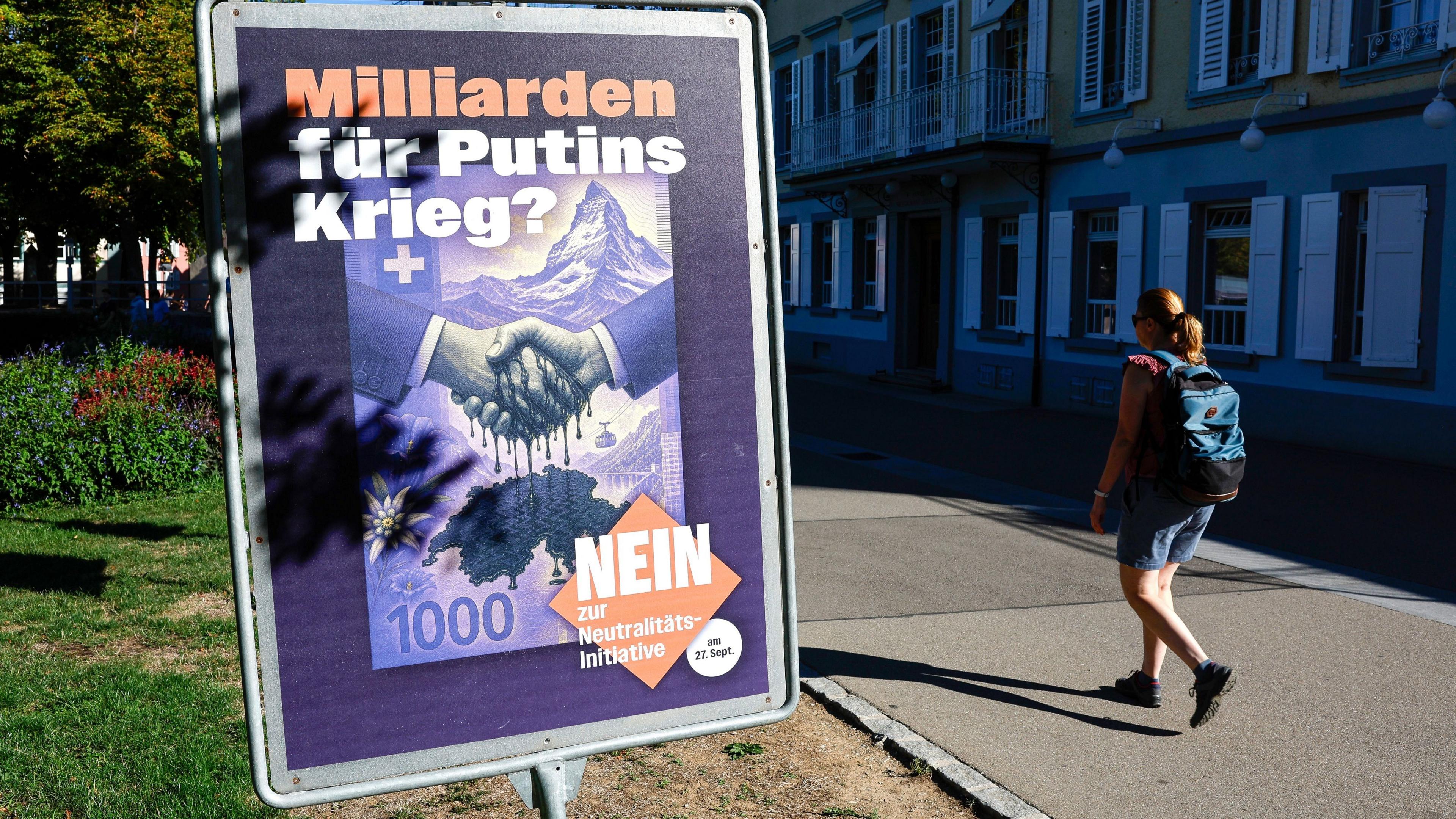

Swiss voters rejected by a wide margin a proposal that would have tightened the country’s neutrality rules, preventing the imposition of sanctions without United Nations approval and limiting ties with the NATO alliance.
The referendum result, with more than seventy per cent of voters voting against the changes, shows that while the Swiss are committed to preserving their long–held neutrality doctrine, they also support the ability to sanction Russia in response to its invasion of Ukraine.
The initiative that came before the electorate was championed by Russia and the right‑wing Swiss People’s Party, but it was opposed by the federal government and all other major political parties. The Federal Council argued that the neutrality principle must remain flexible, allowing Switzerland to protect international rules and its own interests.
As one researcher from the Gfs.bern institute explained, "Voters were not rejecting neutrality itself; they were affirming that Switzerland can impose sanctions while remaining neutral." The Swiss Foreign Minister emphasized that neutrality means neither complete isolation nor indifference, noting that Switzerland will continue to uphold its international obligations and respond to violations of global law.
Switzerland’s neutral status traces back to the 1815 Congress of Vienna, which declared the country’s neutrality to be “eternal.’’ The Hague Convention of 1907 codified this stance, forbidding the supply of weaponry to belligerent nations—a principle Switzerland upheld even during the Second World War, where it stayed impartial while retrieving looted gold and previously refusing entry to Jewish refugees.
The country’s system of direct democracy ensures that significant policy decisions are settled by public vote rather than solely by parliamentary debate, a feature that had a major role in this recent outcome.