In brief
In the wake of France’s highest‑profile unrest, thousands of students have closed school doors, prompting critics to blame the radical left for steering agitation to the ballot box. Prime Minister Sébastien Lecornu has warned the protests risk turning into urban violence and accused the France Insoumise party of exploiting youth demands. Historical echoes of the 1968 uprisings and ongoing financial woes paint a complex backdrop: France’s public debt, high social spending and a divided parliament make any electoral outcome uncertain. The student movement—driven largely by the same social motto of 1968—continues to demand reforms, while policymakers debate decentralisation and constitutional change.
For more than three weeks, thousands of French students have barricaded the entrances to schools across the country, blocking the way of teachers and teachers’ aides and demanding a fresher, more equitable education system.
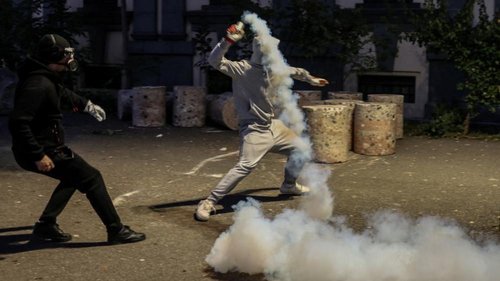
The iconic image of a masked protester carrying a flag, while police stand in the background, captures the country’s epic tradition of public dissent. The protests have spread beyond the classrooms, drawing in workers’ unions and the militants of the long‑running "gilets jaunes" movement.
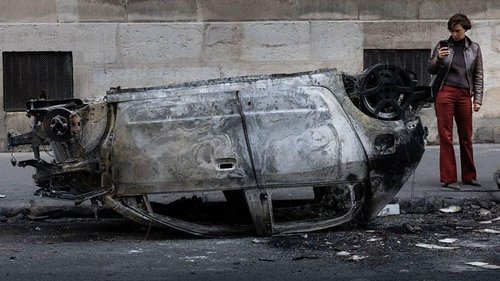
Prime Minister Sébastien Lecornu has taken a hard line, telling the nation that the demonstrations have become "a movement of urban violence". In a statement released Sunday, he accused the left‑wing France Insoumise party—led by presidential hopeful Jean‑Luc Mélenchon—of organising and galvanising the students for electoral gain.
"The high school protests are being weaponised," Lecornu said. "Their historical context can’t excuse turning a civic cause into political ammunition."
Mélenchon, meanwhile, has been a regular presence in schools, touring campuses across Paris to discuss his plans for a wealth tax, a vote‑age cut to 16 and a larger role for the Ministry of Education in shaping social policy.
The echoes of 1968 are palpable. Students who marched en masse on the Champs‑Elysées to seize the Ministry of Culture recall the 54‑day strike that toppled a part of the French apparatus, enabling the left to reshape the territory. That legacy now resurfaces in the face of a ballooning national debt of €120 billion and a political system that many view as reactive rather than proactive.
When economic analysts weigh in, they point to France’s record of 57% of GDP spent on public services, a figure among the highest for wealthy democracies. The public expects a share of the welfare state, yet the supply is constrained by an aging population, a generous pension system and often a lack of consensus in a divided parliament.
Amid this paradox, a new election in June 2024 could either reignite policy fragmentation or inaugurate a generational shift. Senator Anne‑Catherine Loisier, a vocal advocate for decentralisation, argues that France must relinquish much of its Paris‑centric bureaucratic control, redistributing power to local governments to address regional disparities in education and employment.
"We could not afford the status quo," Loisier told reporters. "Giving authority to local authorities would restore trust, reduce the need for protests and promote a more inclusive democracy."
The student movement itself remains a powerful voice in current debates. In recent days, groups of students collected around placards in L‑shaped formations, engaging with parents, teachers and police before marches. In the south,_augustsert _void "? …"
So while the political elite warn of manipulation, on the streets the refrain stays simple: people want basic improvements, a clearer voice, and a system that does not leave them behind.
If the upcoming election does not resolve France’s long‑standing fiscal dilemma, the demands of the teachers, the teachers’ assistants, and the parent‑students alike will continue to echo through stacked avenues and empty halls. Whether France unites to chart a new constitutional direction or remains mired in partisan stalemate, the students’ frustration will likely shape the country’s narrative for years to come.