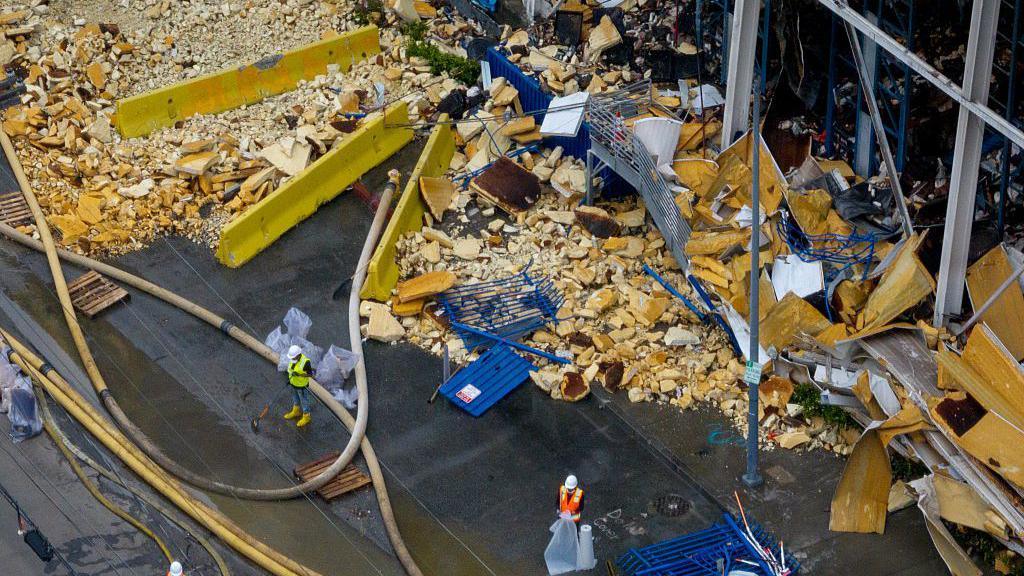
On that wet summer morning in early June a vast, cold‑storage warehouse in Los Angeles erupted in flames. The blaze left behind an estimated 85 million pounds of food—beef, pork, poultry, seafood—gently rotting in the cage‑like chambers.
The smell that drifted over the neighboring street corner spreads like a slick, sour mist. In home‑built kitchens, crooked alleys and on the sidewalks, people turn their noses up at the rancid odor. A local security guard, Mesha, told locals that the air felt as if a body had been left to rot for weeks. He used a sharp, low voice to describe the scent, ending with a heavy, stumbling laugh that carried the frustration of a community losing its comfort zone.
Lineage, the company that owned and operated the warehouse, states that approximately 80 percent of the hazardous food debris has been removed. The firm has been hired to pull back the bulk of the decaying waste and to shatter a polluted site, a process that involves decommissioning panels, vacuuming burning residue, and sealing holes. The company projects a costs range of $80 million to $100 million, some of which will fund specialist cleaning teams that work after dark.
Mayor Karen Bass issued an official letter to the company shareholders. She said what residents asked for had been delayed and that the city would do everything in its power to restore a livable environment and to breathe fresh air back into the neighborhood. The mayor also halted any plans to rebuild until new safety standards sit on the ground.
Environmental scientists warn that the queasy heat and the piles of life‑dangerous food promote the rapid breeding of flies, many of which carry diseases that can lodge into open wounds of both humans and pets. Pests scouts report that dead‑hollow extra-large rats have begun nesting near the debris, masking the heavy winged threats that flutter through the streets. Several residents state their traps can no longer hold them; they will need help to re‑create a habitat that is safe for families and neighbors.
A crowd of protestors gathered on the night of the protest held on the perimeter of the ruins. At the center of their chant, one banner shouted: Demand government resources to clean up warehouse now! The protest found dozens of positions, all wearing variable protective muzzles and masks as they shouted for a solution. The city’s health department was also present with a mobile clinic and distributed air purifiers to households.
Today the fire site is still a somber wound, with workers in hard‑hatted cover and neon vests on a drying bed. Local assistance has delivered only limited progress, with more than a quarter of the waste still in place. Lee Field of the local air quality agency says it will stay for the next week to track the change in toxin levels and advise residents. Within days, some locals think that a better placement of sanitation stations and clear timeline of cleanup may be their only hope to breathe freely again.