Spanish rail authorities have temporarily reduced the speed limit on part of the high-speed line between Madrid and Barcelona after a fault was detected on the track.
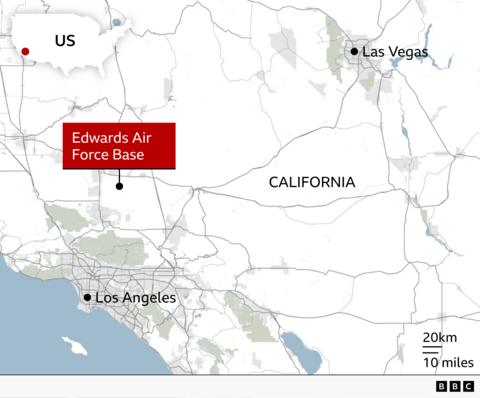
Transport Minister Óscar Puente stated that a crack was found on Sunday night in the line 110km (68 miles) west of Barcelona, between Alcover and l'Espluga de Francolí, in Catalonia.
This decision follows a tragic high-speed collision that claimed the lives of 45 individuals in southern Spain and comes against the backdrop of severe disruptions to local rail services in the northeast of the country.
The transport ministry reassured that the detected fault did not pose an immediate danger to trains currently in operation on the line, which will continue to function.
This marks the latest in a series of speed reductions on high-speed lines after the Adamuz accident in Andalusia earlier this month. The affected section's speed limit will now be set to 80km/h (50mph), a stark decrease from the maximum speeds of up to 300km/h commonly achieved on this route, one of Spain's most utilized long-distance links.
Recently, the speed limit for several segments of the Madrid-Barcelona line was temporarily lowered to 230 km/h after anomalies were reported by train drivers. Although those limits were restored following technical checks, other sections of the Madrid-Valencia line faced temporary cuts to 160km/h and 200km/h.
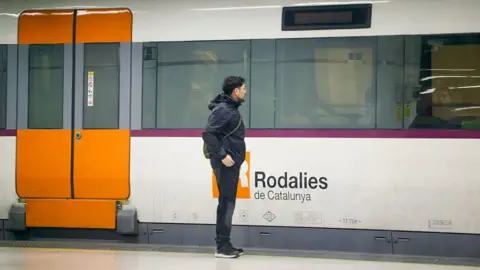
On the ground, the local Rodalies rail service in Catalonia is experiencing significant disruption. A tragic incident last week involved the death of a trainee driver when a train collided with a collapsed wall, leading to increased demands for improved safety protocols from drivers.
Additionally, two separate incidents on Monday caused further chaos, suspending services in the region before partial resumption later that day. The Spanish government is currently investigating the recent issues, including the possibility of a cyberattack.
Political leaders within the Catalan Republican Left (ERC) party have criticized the Rodalies network for decades of underinvestment. Ramon Talamàs, the president of the Chamber of Commerce of Terrassa, emphasized that reputational damage may exceed the financial losses faced by the rail service.
Spanish Prime Minister Pedro Sánchez is scheduled to address Congress on February 11 regarding the ongoing rail crisis, as investigations continue into the Adamuz train crash, which involved a derailment resulting from track failures.
Preliminary findings indicate that a significant piece of track, manufactured in 2023, had been welded to an older section built in 1989. It appears that the junction where these two sections met may have been where the failure occurred. Opposition figures have called for the resignation of Transport Minister Óscar Puente, accusing him of misleading the public regarding safety issues.