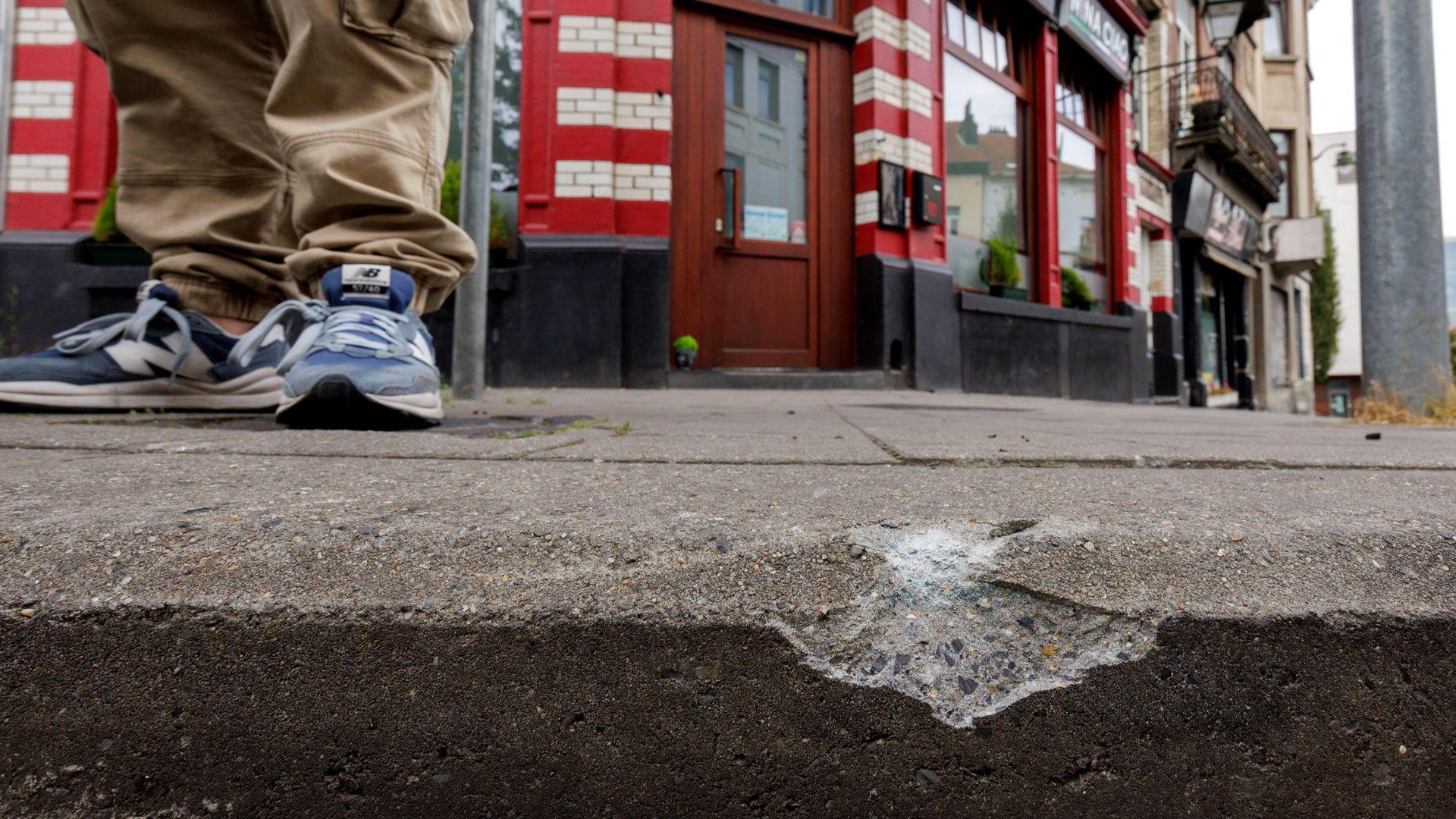

Last Monday night, drug gangs turned Salvatore’s pizzeria in Brussels into a crime scene.
Salvatore recalled fleeing the building as shots rang out, leaving toothbrush‑shaped bullet holes on walls and floor.
His restaurant sits on a tight square in St Gilles, a central area near the international Midi station with regular connections to London and Paris.
Over the past two years Brussels has seen a spike in shootings tied to drug trade – more than a hundred in 2025 and 65 so far this year.
This incident was the third shooting in the neighbourhood in just three days.
“Are we in an American gangster movie? This needs to stop,” Salvatore said, underscoring the sense of panic that has taken hold.
For residents like Murielle, a 70‑year‑old, the violence is a shadow on everyday life. She sits on her garden’s porch – an open space in a congested city – and still sees the track of pooled blood from yesterday’s shooting.
She recalls a time when “drug dealers used to be polite and decent,” and she wishes that the neighborhood would return to a safer quietude.
Drug transactions, now open and unregulated, have erupted plainly in streets: buyers circle around sellers, trade crack, and buyers queue in public for a quick purchase, a practice that has escalated gunfire incidents.
According to Jurgen de Landsheer, chief of Brussels South Police, a hot spot can net a dealer up to €50,000 per day.
He warns that “organized crime in the Belgian capital has become significantly more violent” and that there are more than 200 drug‑dealing points across the city.
This trend mirrors the situation in other European hubs, such as Marseille, and is tied to the rise of cocaine in ports such as Antwerp, which has seen record seizures.
Police have noticed that gangs are adopting Marseille‑style tactics, and have been threatened by “young minds” who buy firearms for a few hundred euros each.
Last weekend, a police station in Brussels was the target of a shooting by strangers on a scooter, a first for the city’s forces, according to de Landsheer.
“The biggest danger is a stray bullet,” he said, noting that some offenders are as young as twelve.
Faced with escalated gunfire and drug inflows, Belgium’s interior minister announced an additional 40 police officers to the hotspot last Thursday, but de Landsheer stresses that police patrols alone will not solve the crisis.
“We need prevention over repression,” he said. “Society must give a future to young people – that is the core of the problem.”
Back in St Gilles, Salvatore calls for an end to violence: “Centers are losing value; people talk about moving out.” Murielle refuses to be intimidated, pledging to keep protecting her neighbourhood.