
In brief
The Sacred Heart church, a sanctuary for many immigrants in Washington D.C., has seen over 40 members detained or deported due to increased immigration crackdowns. The atmosphere of fear has drastically reduced church attendance and made daily activities perilous for families. Church leaders are stepping in to help, providing support through legal assistance and food deliveries, as the community grapples with a traumatic existence marked by uncertainty and loss.
WASHINGTON, D.C. – A once vibrant spiritual sanctuary, Sacred Heart Catholic Church, located close to the White House, has become a symbol of fear for many of its immigrant congregants. Once known for its welcoming environment, over 40 members of this parish have reportedly been detained or deported since federal immigration enforcement efforts increased significantly in August.
As the current administration carries out a stringent crackdown on immigration, many parishioners now hesitate to leave their homes even for basic necessities such as attending Mass, purchasing groceries, or seeking medical care. Cardinal Robert McElroy of the Archdiocese of Washington expressed that this relentless enforcement strategy is profoundly unsettling, stating, It really is an instrument of terror for these immigrant communities.
The church, established over a century ago primarily by Irish, Italian, and German immigrants, has evolved to predominantly serve congregants from Latin America, particularly El Salvador, as well as Haiti, Brazil, and Vietnam. The once-bustling services have suffered noticeably; Rev. Emilio Biosca, the church’s pastor, notes that about half the people are afraid to come.
The impact of the immigration raids has been devastating. Families are mourning the absence of loved ones, and the number of empty pews stands testament to the community's plight. On a recent day, parishioners held prayers for those detained while publicly voicing their shared grief and fear. The church community, however, refuses to be seen as powerless; pastors and volunteers have taken on new roles, attending immigration court hearings and offering substantial support to those affected.
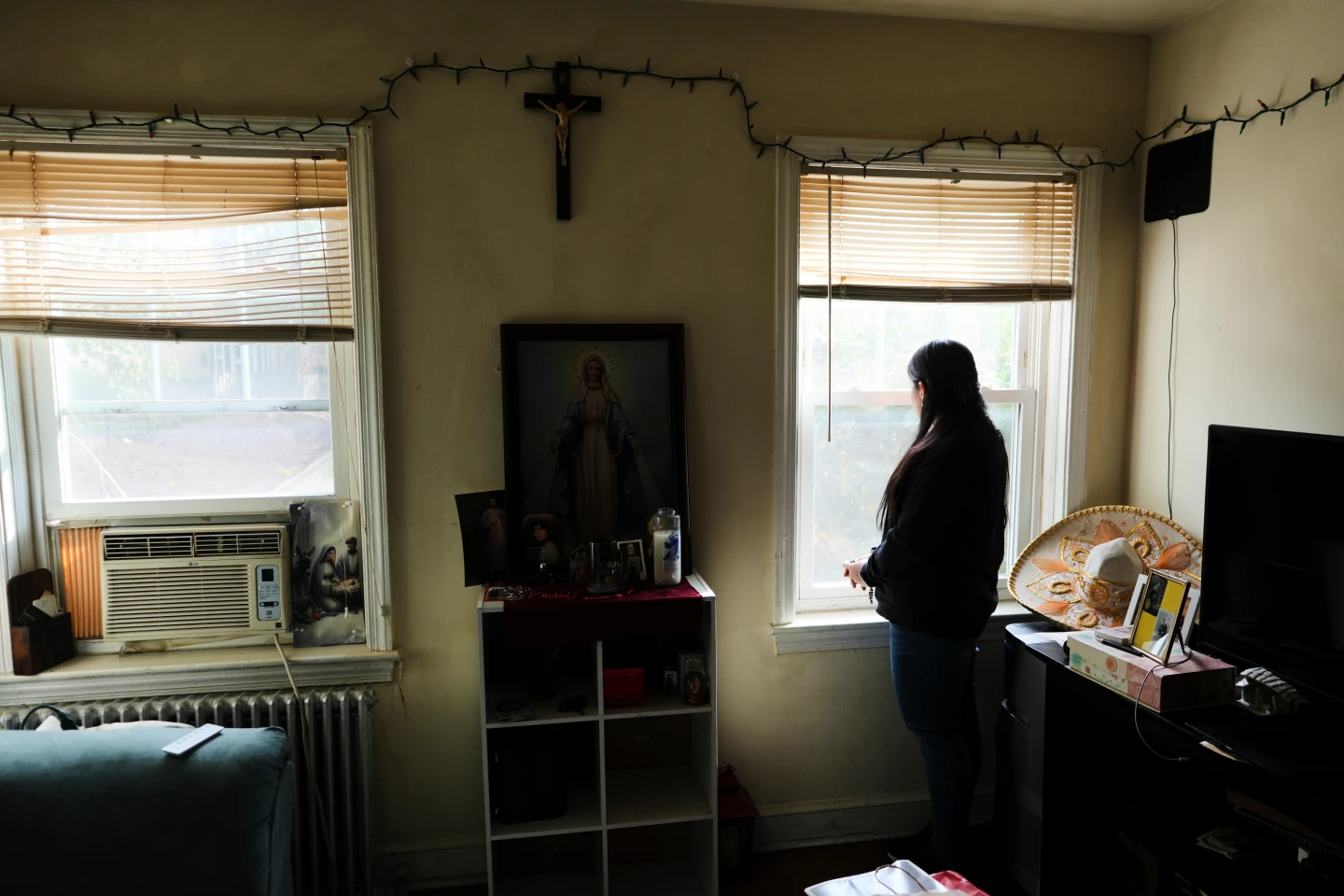
A particularly harrowing story concerns a woman who has not returned to the church since her husband was detained by ICE. They fled gang violence in El Salvador almost 20 years ago, seeking refuge and community at Sacred Heart. Now, she prepares for a potential move to Boston for safety while navigating her husband’s deportation.
Members of the congregation, many of whom are active volunteers, are making efforts to stand together against this wave of fear and loss; they gather to pack food for delivery and show support for each other amid trying times. Auxiliary Bishop Evelio Menjivar, himself a former undocumented immigrant, emphasizes the church’s commitment to advocating for migrants and speaks passionately about the special significance Sacred Heart holds for immigrant families.
As the struggle continues, many parishioners are continuously redefining what 'home' means and how to find solace and security amid a climate fraught with uncertainty.


