
In brief
In early July, Russian glide bombs and FPV drones intensified their strike pattern on the Ukrainian city of Zaporizhzhia, located just 24 kilometres from the frontline. Local residents like IT specialist Anna Holovchenko are frequently woken by blasts, as every dawn brings a new wave of hostile fire. Acting mayor Regina Kharchenko confided that the city’s municipal crews have begun setting up additional shelters, anti‑drone nets and shatter film on public buildings in a last‑ditch effort to protect civilians. Despite Ukrainian forces pushing Russian troops back, the absence of advanced electronic warfare and the deployment of mesh‑networked drones mean the attacks are proving more lethal and harder to predict. The city’s residents face a constant threat, balancing the psychological toll of living under a bombed sky with a stubborn determination to stay until victory.
By Vitaly Shevchenko | 11 July 2026, 00:02 BST
It was five in the morning when Anna Holovchenko looked out of her apartment window and saw a blue‑white plume of smoke billowing over the city. The blast that had followed is part of a new wave of Russian fly‑by attacks that began in early June, turning the eastern Ukrainian capital into a battlefield that extends beyond the frontline.
For the past few weeks, the Ukrainian city has seen a surge in glide‑bomb impact, FPV‑drone incursions and magazine‑style air strikes that hit everything from schools and bus terminals to government buildings, according to local officials. Rod #1 logged a record 884 drone interceptions during the last week of June alone.
“The enemy has stepped up terror against civilians, municipal transport, privately‑owned buses, cars, residential buildings and even children,” acting mayor Regina Kharchenko told reporters after a meeting held in a makeshift underground shelter. “This is just another ordinary day in Zaporizhzhia.”
She is already putting in place counter‑measures: anti‑drone nets over bus stops, shatter‑film on windows of schools and hospitals, and plans for more community shelters. Yet, “I live in an ordinary high‑rise, on the seventh floor. I have no personal bunker with 10 bodyguards. I live an ordinary life,” the mayor said, underscoring the psychological shock of living under a bombed sky.
Experts from the Royal United Services Institute explain that the intensified raids are driven by new tactics: ships carrying larger motherships deliver smaller drones that work in mesh‑networked formations, enabling them to strike far beyond the range of conventional fighter‑jet defenses. The result: more precision strikes, harder to jam, with greater destructive reach.
The Zaporizhzhia nuclear plant—Europe’s biggest—lies just 50km southwest of the city, within occupied territories, fitting the Kremlin’s narrative that it is the “heart” of the region. The reference has cast a shadow over the entire city, with local residents fearing the worst even under the promise of continued supplies of food and fuel from the central government.
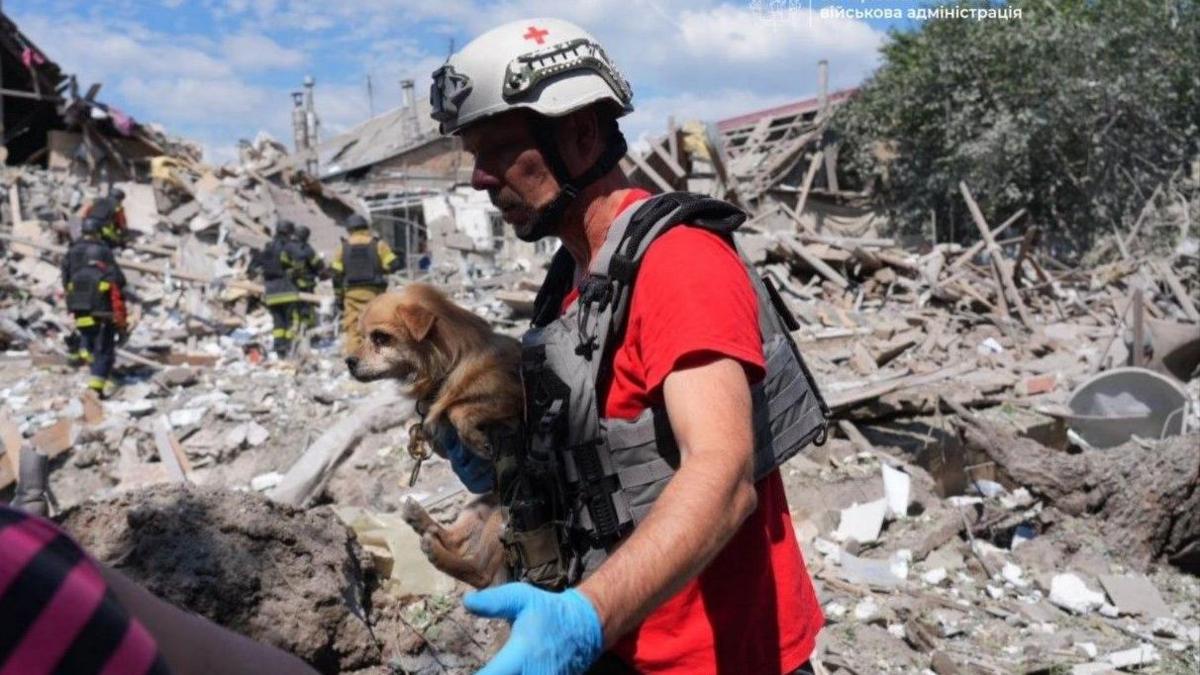
One tragic illustration of the daily threat: a white school bus damaged by a drone, its back blown open and its doors shattered. Three civilians lost their lives in that strike. The incident underscores the civilian toll of military operations that are now frequent enough that “we’re just trying to stay safe... until our victory,” Anna says.
Through the blistering onslaught, a small band of Ukrainian troops has managed to push Russian forces a few kilometres distant, but the evening blast intensity continues to rise. Russian advances have slowed due to successful Ukrainian strikes on oil refineries, fuel storage, and logistics in the occupied heartlands.
The fight continues below the front line, a silent war that scars the city’s infrastructure and its citizens, defying the narrative of a simple territorial disagreement. Zaporizhzhia stands as a reluctant frontline, its people enduring the absurd normalcy of nightly bombings, all while arguing whether to leave or stay. Their probability to survive hinges upon the resilience of both the city’s civil‑defense network and the steadfast resolve of its ordinary inhabitants.
Interactive summary provided by Floodlight (URI Visualisation).

