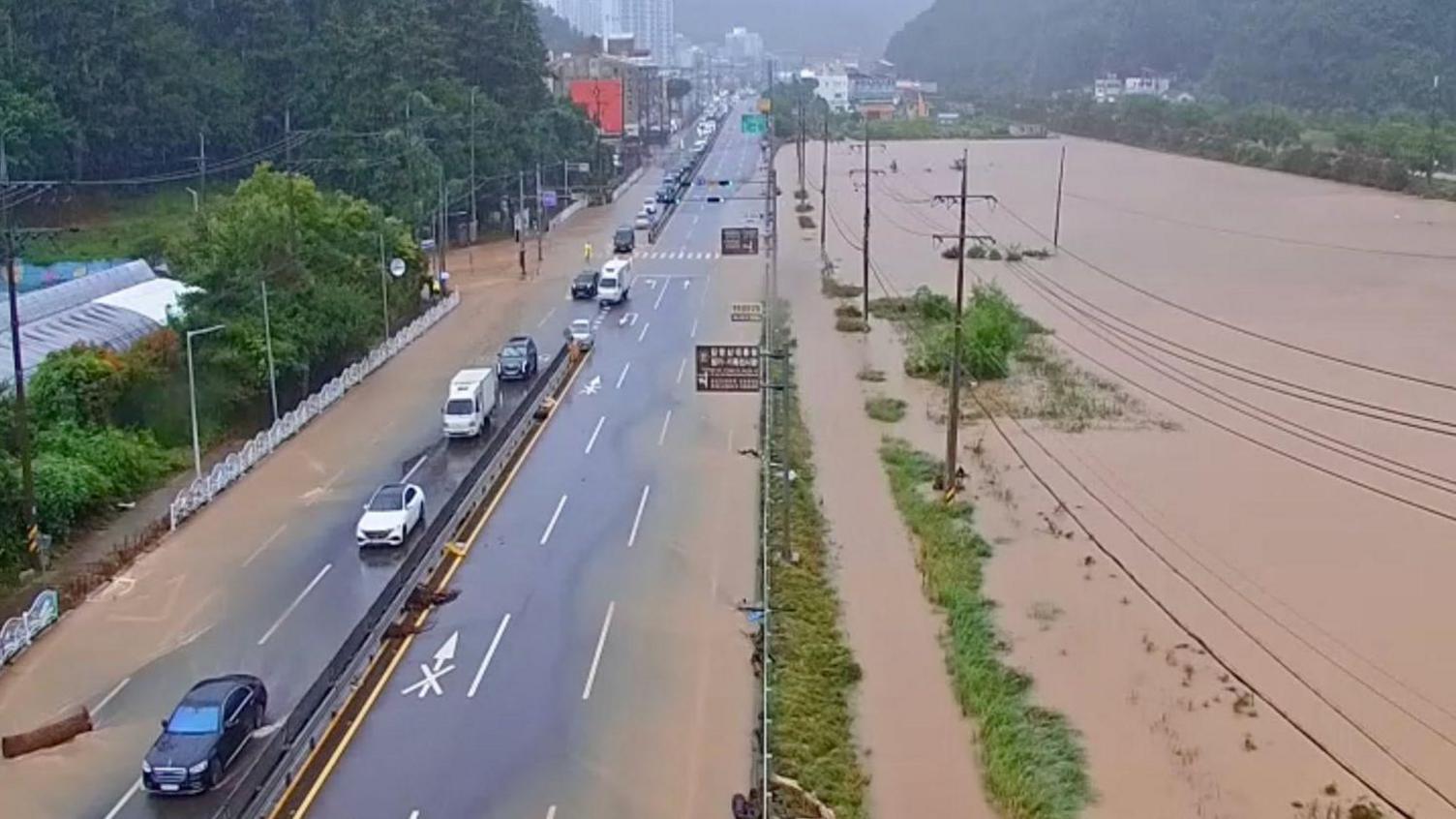
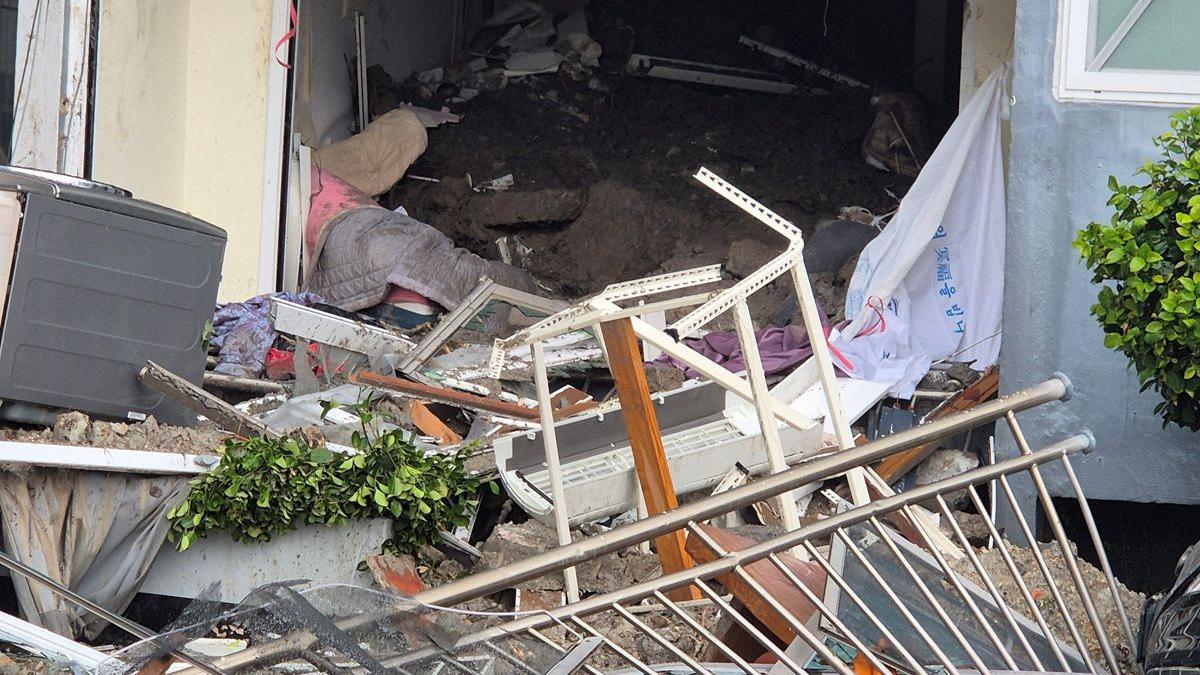
Record rainfall doused Geoje, South Korea, causing a deadly landslide that buried an apartment and killed one person.
Geoje city saw 124.5 mm of rain in one hour— the highest since meteorological records began in 1972. Between Sunday and Monday, the city received more than 400 mm of rain, overwhelming drainage systems and triggering a landslide that buried the first floor of an apartment building on Monday morning.
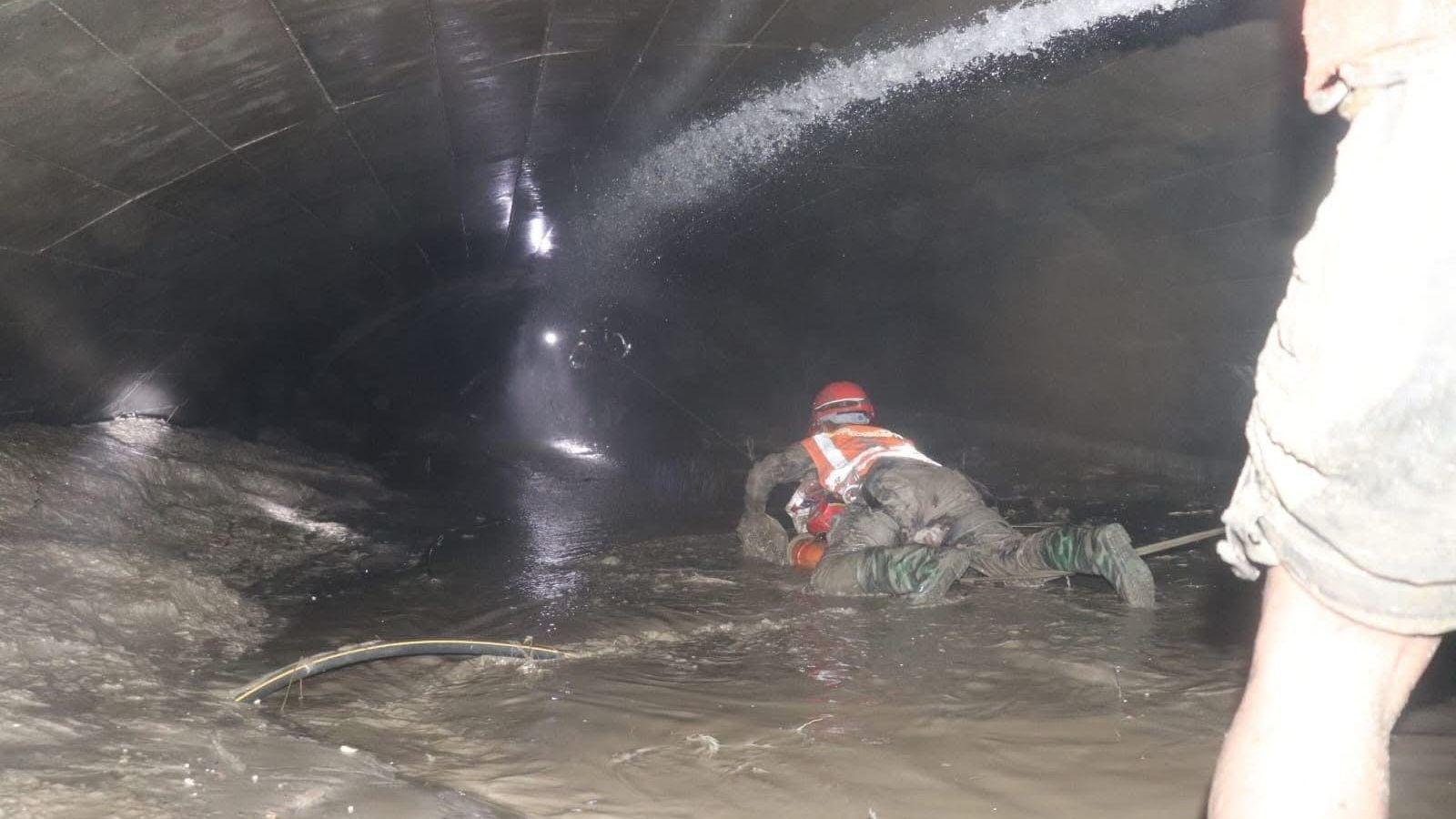
Rescuers later pulled three residents out; one was declared dead and two others were wounded. Video footage shared on social media shows cars stuck in flooded streets, currents sweeping debris.
City officials announced closures of several tourist attractions, suspended bus operations, and halted household waste collection due to flooded or damaged roads. Authorities urged residents to avoid driving, stay away from riverbanks, and seek safe zones if needed.
The extreme weather mirrors a larger pattern across East and Southeast Asia this year. Strong El Niño conditions have spurred a more intense typhoon season, with massive storms sweeping China, Japan and the Philippines, causing widespread flooding and infrastructure damage.
In Japan, “unprecedented” rainfall killed 10 people in Chiba prefecture and left thousands stranded at Narita Airport. Power outages forced many to use generators, leading to a fatal carbon‑monoxide poisoning case noted by NHK.