Quebec's Secularism Law Tightens: Public Prayer Restrictions and More
The Canadian province of Quebec plans to impose restrictions on public prayer and limit religion-based menu offerings in public institutions as part of its latest effort to strengthen state secularism.
These secularism 2.0 changes are part of a new bill introduced by the governing Coalition Avenir Quebec (CAQ), expanding a controversial 2019 religious symbols law that has ignited national debate.
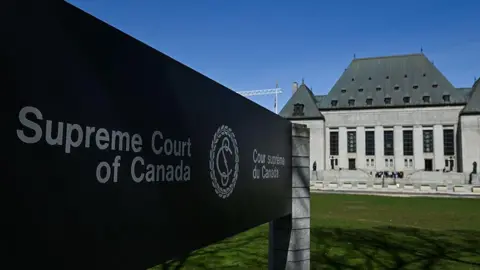
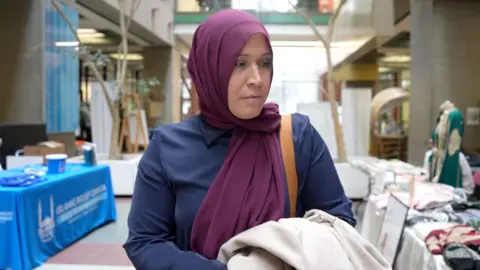
The original law prohibits judges, police officers, teachers, and public servants from wearing symbols like kippahs, turbans, or hijabs while at work. A legal challenge to this law will be heard by Canada's Supreme Court early next year.
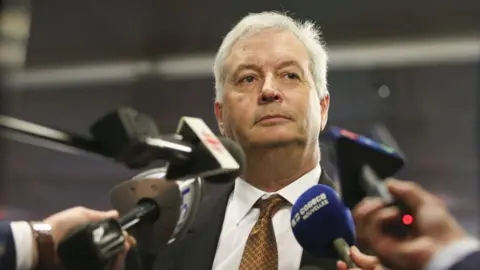
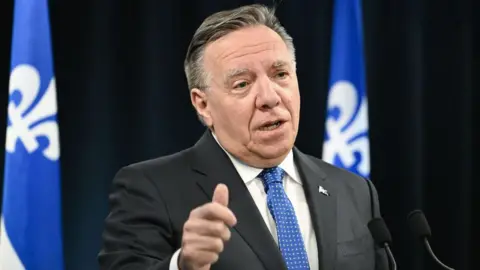
At a press conference, Jean-François Roberge, the minister responsible for secularism, stated that the bill was designed to respect both individual and collective rights. The proposed measures in Bill 9 include:
- Extending the ban on wearing religious symbols to staff in subsidized daycares.
- Limiting collective religious practices such as prayer in public without municipal permission.
- Preventing face coverings in daycare up to post-secondary education.
Roberge emphasized that the new limits on public prayer stem from recent demonstrations where public spaces were used for prayer without authorization.
Opposition parties, particularly the Parti Québecois, criticize the CAQ for creating division to capture political support ahead of the upcoming provincial election. The National Council of Canadian Muslims has also condemned the bill, accusing the CAQ of perpetuating identity politics.
The discussion surrounding secularism has been ongoing in Quebec, where incidents have arisen involving religious minorities, notably in educational settings. Quebec Premier François Legault has also vowed to tackle issues related to what he termed Islamist beliefs introduced by certain teachers.
This tightening of secularism laws reflects an ongoing debate in the province over the intersection of religion, identity, and public policy, one that mirrors legislative trends in countries like France and others in the European Union.