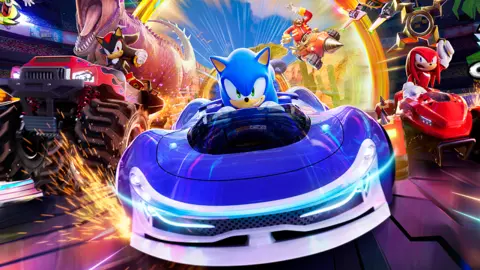
Sega does what Nintendon't. This iconic slogan from the 1990s encapsulated a once bitter rivalry between Sega and Nintendo. In today's gaming landscape, however, the atmosphere has shifted significantly, with Sonic games now finding a home on Nintendo consoles. But with the launch of Sonic Racing: CrossWorlds, is Sega reviving that competitive spirit?
The new game's advertisement strikes a resemblance to its 1992 predecessor, suggesting a playful jab at Nintendo's Mario Kart. At a recent game fest, Iizuka acknowledged the competition but avoided explicitly naming his rivals. Some industry experts perceive Sega's moves as a light-hearted marketing strategy, especially considering that Nintendo's Switch is likely to dominate sales for the new game.
With the gaming industry rapidly evolving, Sega faces the challenge of not just revamping Sonic's brand but also enticing newer generations. Players today are inclined to stick with titles that offer continuous updating experiences, such as Fortnite and Call of Duty. In response, Sonic: CrossWorlds plans rotational content and features like a 'season pass' for additional in-game extras.
Iizuka emphasized the importance of keeping the game refreshed regularly, ensuring players have reasons to return month after month. Sega aims to embrace contemporary gaming trends while balancing the creation of innovative experiences, moving away from the legacy of solely re-releasing classic titles. With this strategy, they hope to introduce Sonic to a new audience, ultimately expanding the franchise's appeal.
As Sega progresses with Sonic, they continue to invest in new projects, prioritizing original content over remakes, with the latest entry in the Crazy Taxi series already in development. This approach reflects a broader industry trend, where companies balance nostalgia with fresh offerings to stay relevant in a competitive marketplace.
The new game's advertisement strikes a resemblance to its 1992 predecessor, suggesting a playful jab at Nintendo's Mario Kart. At a recent game fest, Iizuka acknowledged the competition but avoided explicitly naming his rivals. Some industry experts perceive Sega's moves as a light-hearted marketing strategy, especially considering that Nintendo's Switch is likely to dominate sales for the new game.
With the gaming industry rapidly evolving, Sega faces the challenge of not just revamping Sonic's brand but also enticing newer generations. Players today are inclined to stick with titles that offer continuous updating experiences, such as Fortnite and Call of Duty. In response, Sonic: CrossWorlds plans rotational content and features like a 'season pass' for additional in-game extras.
Iizuka emphasized the importance of keeping the game refreshed regularly, ensuring players have reasons to return month after month. Sega aims to embrace contemporary gaming trends while balancing the creation of innovative experiences, moving away from the legacy of solely re-releasing classic titles. With this strategy, they hope to introduce Sonic to a new audience, ultimately expanding the franchise's appeal.
As Sega progresses with Sonic, they continue to invest in new projects, prioritizing original content over remakes, with the latest entry in the Crazy Taxi series already in development. This approach reflects a broader industry trend, where companies balance nostalgia with fresh offerings to stay relevant in a competitive marketplace.