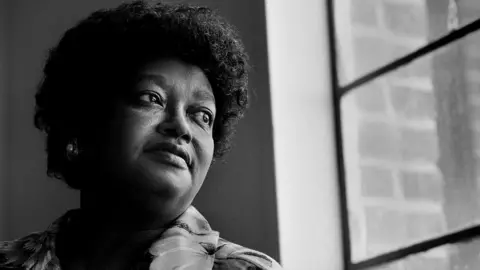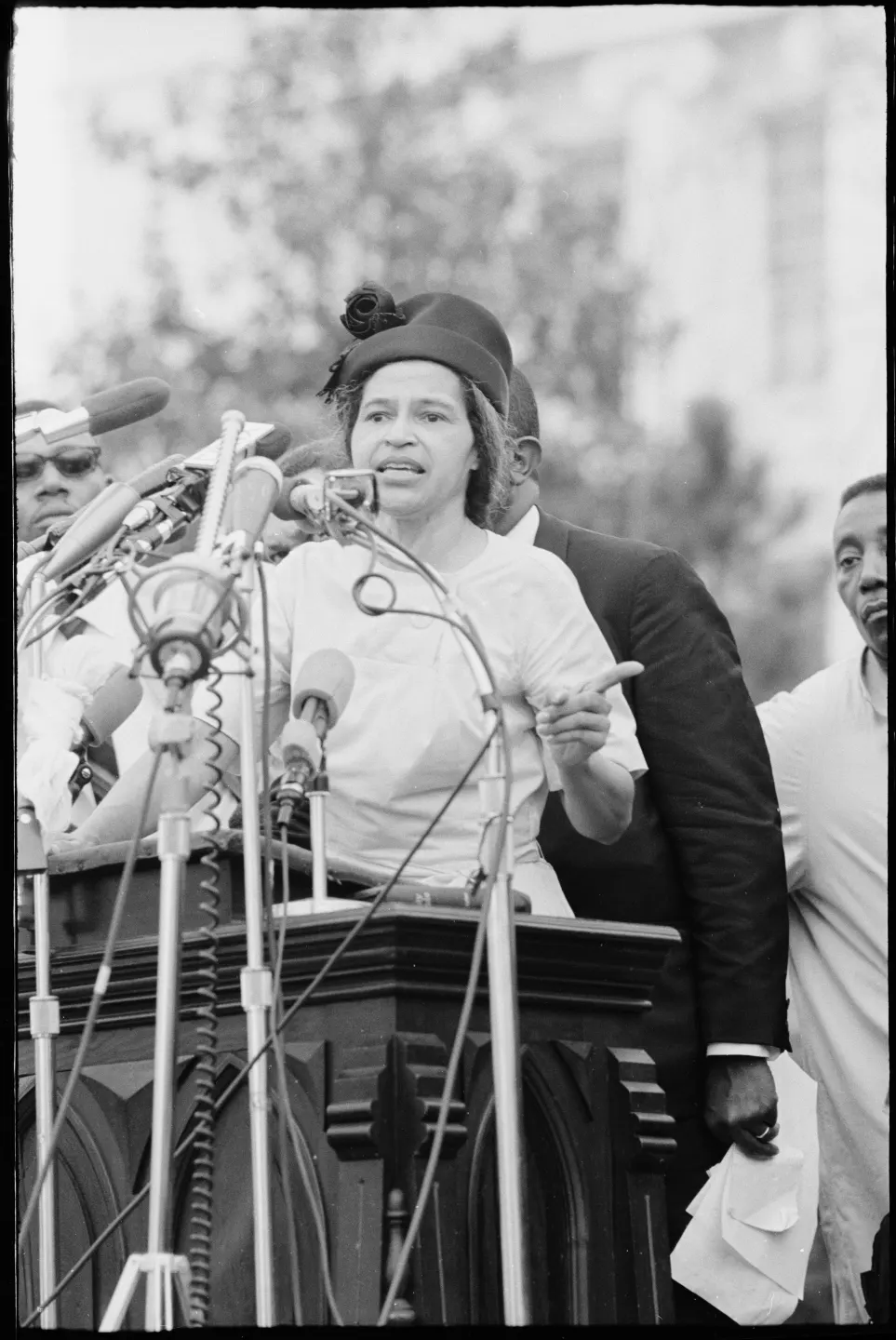
MONTGOMERY, Ala. (AP) — In a remarkable unveiling of history, new photographs depicting Rosa Parks as a Civil Rights icon have been made public for the first time, portraying little-known aspects of her impactful legacy.
The images, captured by the late Civil Rights photographer Matt Herron during the iconic Selma to Montgomery march of 1965, reveal Parks engaged in the fight for voting rights—a struggle culminating in the landmark U.S. Voting Rights Act of that year.
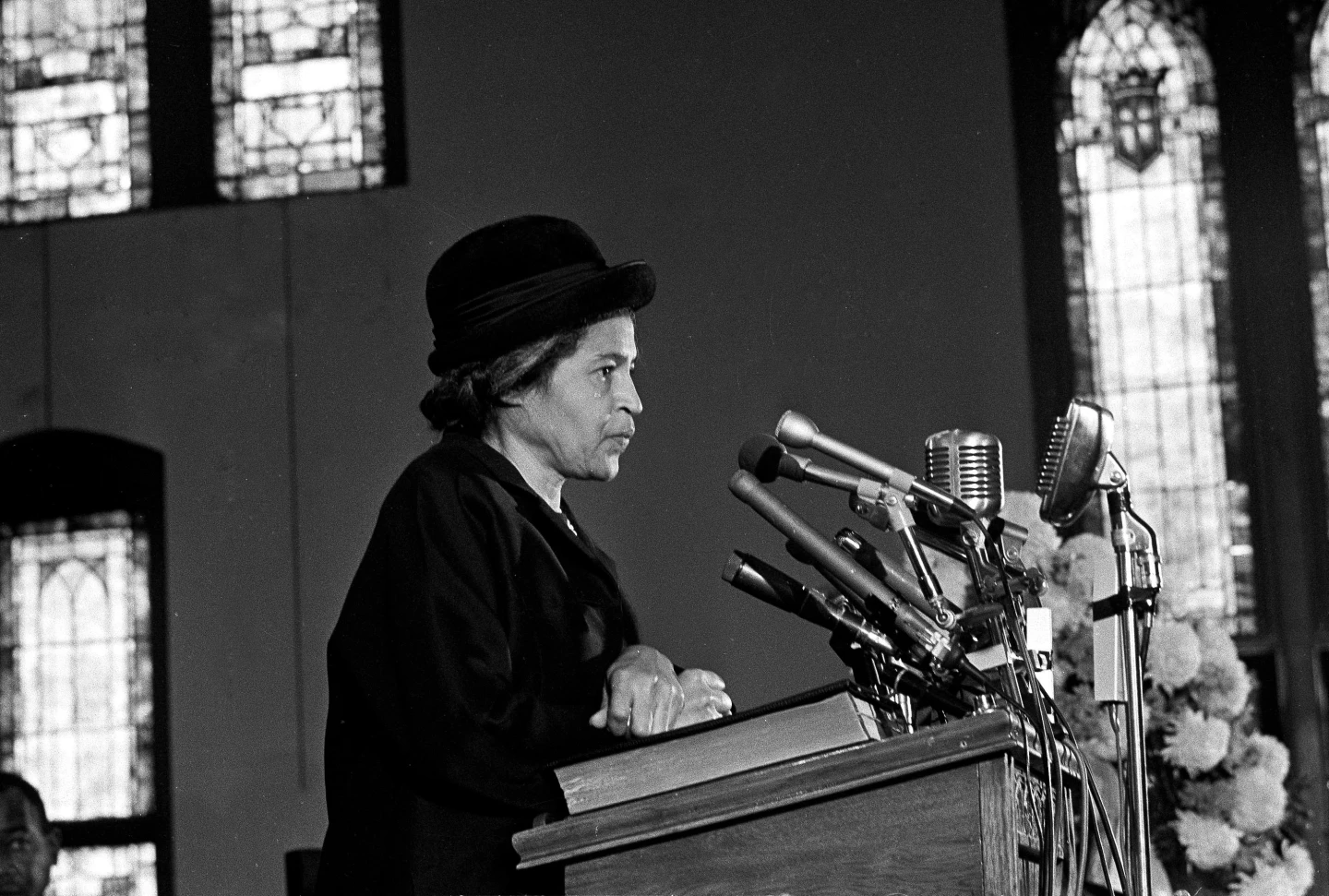
While most historical accounts celebrate Parks for her courageous act of civil disobedience on December 1, 1955, which initiated the Montgomery Bus Boycott, these newly released photos, now part of the Rosa Parks Museum archives, highlight her enduring activism beyond her initial act of defiance.
“This is showing who Ms. Parks was, both as a person and as an activist,” remarked Donna Beisel, director of the museum.
The photos, many of which have never been printed before, serve as a poignant reminder of Parks' broader contributions and her involvement alongside countless others who participated in the march.
After her husband, Jeannine Herron, discovered these previously unseen images among a contact sheet at Stanford University, their release invites a renewed appreciation for the everyday individuals who propelled meaningful change during this transformative period.
The reaction to the exhibition was profound during the gathering of Montgomery Bus Boycott participants and their descendants who recognized the historic significance of their struggles.
A special moment occurred when Doris Wilson, a remarkable participant from the Selma to Montgomery march, reconnected with June Finer, the doctor who tended to her feet during the march decades ago. Their heartwarming reunion underscored the personal histories intertwined with the larger narrative of the Civil Rights Movement.
Cheryl Gardner Davis also reflected on her experiences and how the newly surfaced photographs provided validation of her family's sacrifices while supporting the marchers.
The release of these photographs not only honors Rosa Parks' legacy but also brings to light the stories of many unsung heroes whose contributions significantly shaped the course of American history.