In brief
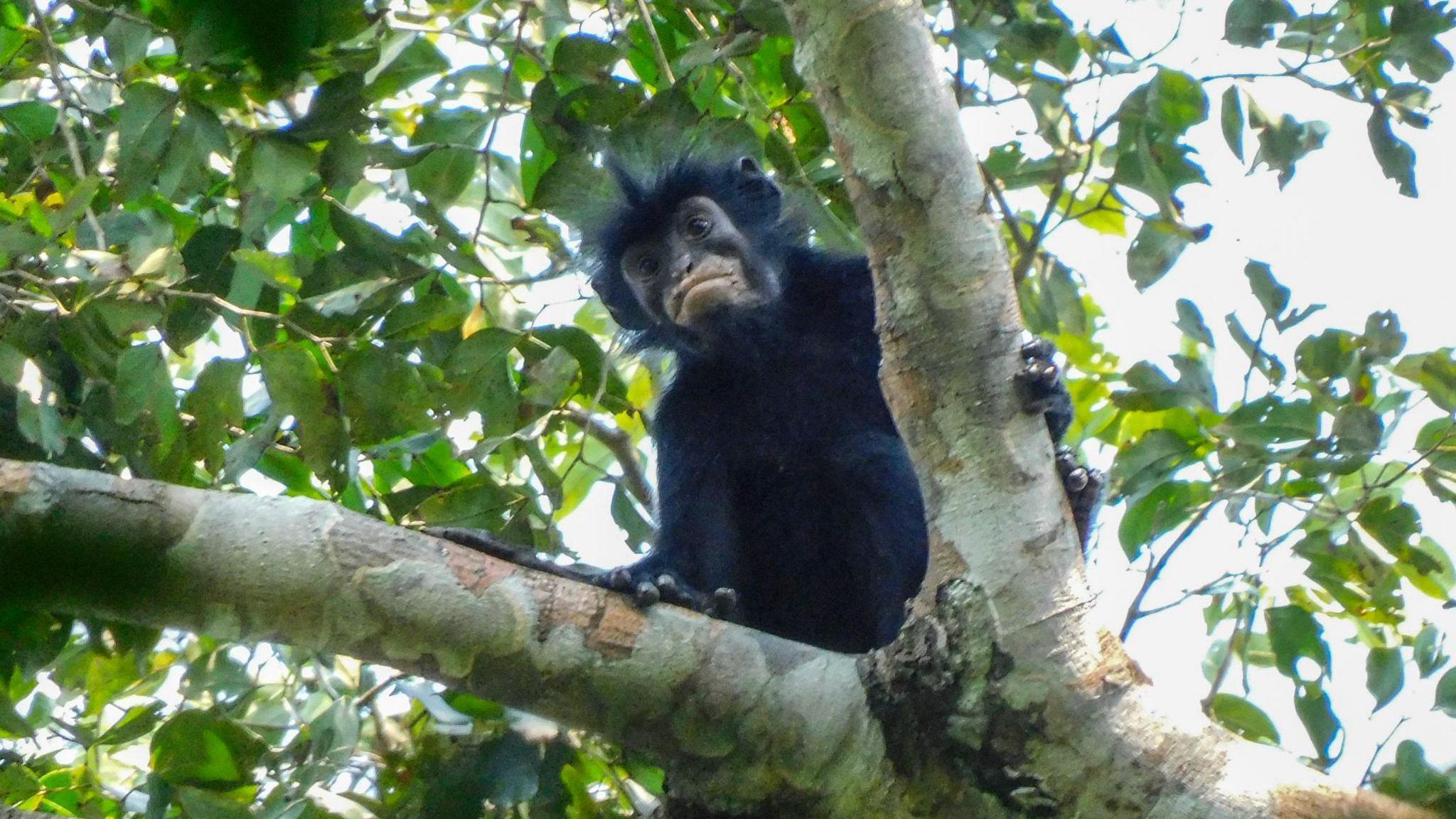
A team of researchers has formally identified a previously unknown colobus monkey in the forests of the Democratic Republic of Congo, the species, named *Colobus congoensis*, is noted for its black fur and startling pinkish‑orange lips. The discovery, based on field observations, audio recordings, photography and DNA sequencing, marks the fifth new African monkey species in the last 75 years. Locals already knew of the animal, calling it ‘Likweli,’ but its secretive habits and high canopy refuge kept it hidden from the scientific community. The species’ newfound status may trigger stronger legal protection against hunting, while further studies plan to assess population size and ecological role.
Scientists working in Lomami National Park have announced that a hitherto unknown colobus monkey has been formally identified as a new species. The primate, named Colobus congoensis, is instantly recognizable by its black fur, black face and striking pinkish‑orange lips – a feature that earned it the local nickname “Likweli.”
The discovery process spanned over a decade: the first blurry photograph appeared in 2008, followed by a second sighting ten years later. A multidisciplinary team from the Democratic Republic of Congo, the United States and Germany then combined audio recordings, high‑resolution photography and genetic sequencing. Their results – published in PLOS ONE – confirmed the monkey’s genetic distinctiveness and warranted its classification as a new species.
Late‑night field notes from 52 surrounding villages revealed that only eight of those communities had ever seen the animal, underscoring its elusive nature. “They prefer the high canopy, and we had to be patient,” said junior researcher Junior Amboko. “It felt amazing to finally put their face into the scientific record.”
Professor Kate Detwiler of Florida Atlantic University highlighted that colobus monkeys lack thumbs, a trait that defines their unique movement style. The bright lip coloration may serve as a visual signal for mate attraction or species recognition, though the exact function remains untested.
Beyond its eye‑catching appearance, the new species plays a vital role in the forest ecosystem. Dr. Detwiler speculates that colobus monkeys aid seed dispersal and forest regeneration due to their herbivorous diet. “They’re an integral part of canopy dynamics, yet their rarity may be linked to the scarcity of suitable food and habitat.”
The animals are hunted for meat, and official recognition as a distinct species could strengthen legal protections and curb poaching. Researchers plan comprehensive surveys to estimate population size and to observe behavioral patterns, hoping to fill gaps in knowledge about this secretive primate’s life cycle.
For a closer look at the Likweli’s dramatic roar captured during the study, watch the accompanying video below.