
In brief
While tariffs imposed by the US present significant challenges for China, the economic landscape is further complicated by sluggish consumer spending, a struggling property market, and reduced foreign investment appetite, raising concerns about sustained growth in 2024.
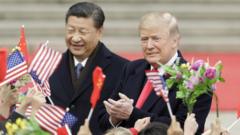
In recent weeks, the economic outlook for China has raised eyebrows as it becomes evident that the country's struggles are not solely dictated by President-elect Donald Trump's potential tariffs on Chinese goods. Despite a recent announcement that China's economy managed to achieve its 5% growth target for 2024, analysts contend this is one of the slowest rates observed in decades, driven by a mix of protracted issues including a property crisis, significant local government debt, and high youth unemployment.The resurgence in growth over the last quarter of the previous year has been described by the head of the country's statistics bureau as a "hard won" achievement after substantial stimulus measures were introduced. However, as the World Bank outlines, anticipation for 4.9% annual growth might be misleading, as internal economic impediments present graver challenges than anticipated tariffs.With approximately $500 billion worth of Chinese products facing possible tariffs from the U.S., businesses and consumers are increasingly cautious. This landscape is charged with uncertainty, as China's export market—the lifeblood of its economy—faces potential contraction. Export figures revealing a record output of electric vehicles and advanced machinery are now clouded by tariffs that could prompt shifts in trading patterns. While diversifying markets in emerging economies may seem like a solution, these regions lack the robust demand seen in North America and Europe, which could ultimately hinder growth potential.Additionally, consumer behavior across China significantly complicates the economic picture. A notable lapse in household spending—which previously comprised a large segment of the economy—has been traced back to a crashing property market, still reeling from excess inventory and spiraling prices. Goldman Sachs predicts a protracted downward trend that will weigh heavily on economic momentum for years, as household consumption shrinks to a mere fraction of its pre-pandemic contribution.In response, the government has initiated initiatives aimed at rekindling consumer enthusiasm, but experts argue that without addressing fundamental factors—such as insufficient income growth and a high unemployment rate—these measures may fall short. The youth unemployment rate remains alarming and the stagnation of wages leaves many consumers with diminished purchasing power.Moreover, the waning appetite of foreign businesses to invest in China adds another layer of complexity. Domestic unrest due to economic grievances has led to a rise in protests, reflecting dissatisfaction that can no longer be ignored. Certainly, while China's strategic intent is to pivot towards high-tech industries and become a world leader in innovative manufacturing, apprehensions about tariffs and uncertain economic policies compel foreign investment to retreat.In summary, as the Chinese government endeavors to stabilize its economy, the interplay of tariffs, consumer spending, and investment landscapes poses significant challenges. According to experts, rectifying these issues will determine whether the country can maintain its growth momentum or must accept a scaled-back economic trajectory. China's ability to navigate these complexities will be critical in ensuring social stability and sustained economic progress.
