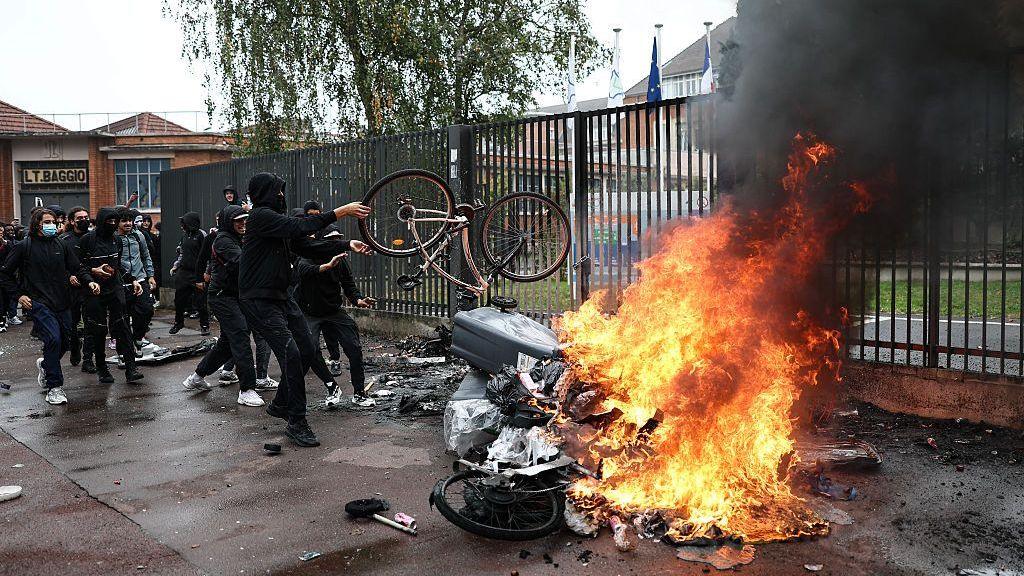
In a country marked by a string of public sector strikes, French students took to the streets and classrooms, blocking entrances to 400 schools nationwide and prompting the Interior Ministry to detain 440 people, most of whom were minors, according to Minister Laurent Nuñez. The demonstrations began in the Paris region and have escalated into violent clashes, with teachers and officers sustaining injuries and properties such as garbage bins and bus stops being damaged and set alight.
"We’re here to deliver a message," one 16‑year‑old told AFP. “We’re not here to smash everything up for no reason. We’re here precisely to say that the education system is broken. There are 34 of us in each class, and it’s just not feasible. The teachers are overworked.”
Education Minister Édouard Geffray defended the right to protest but slammed reports of violence as “indefensible.” He urged students not to extend blockades, warning that “the right to demonstrate is a fundamental freedom that cannot justify such actions.”
Police – some 48 officers – were hospitalized, as were at least ten teachers, according to the education ministry. In a statement to BFMTV, Nuñez said two‑thirds of those detained had entered police custody, although the exact figure was still being confirmed.
Ryad Rani, president of the Union Syndicale Lycéenne, accused the government of “repression” and the police of using excessive force. Speaking to AFP, he noted that students had hurled projectiles at officers while the latter returned with batons and tear gas, heightening tensions on the school campuses.
Prime Minister Sébastien Lecornu cautioned against any further escalation, noting that the protests had already seen 164 arrests the previous day. He warned that “fireworks, fires, violence near high schools: nothing justifies endangering students, staff or police officers.”
The crisis coincides with a nationwide walkout by teachers, hospital staff and civil servants demanding better pay and working conditions. While some 200,000 people joined the union protests, most events were said to be peaceful, according to la Núñez.
As the government faces mounting pressure, the debate over France’s education system and how to address the root causes of the unrest continues to intensify. The government’s next steps will be crucial in determining whether the current wave of protests will subside or give way to deeper systemic change.