In brief
A violent storm on August 11 slammed Gary, Indiana, leaving over 30,000 residents without electricity after more than a week of outages. Residents rely on generators, friends and aid from World Central Kitchen to survive while power companies struggle to restore service. The outage has sparked community action, lawsuits against the utility company, and demands for federal relief as climate‑driven storms may become more frequent.
Thousands in Gary, Indiana are still left without power more than 12 days after a violent storm knocked out the city’s electricity.
The 77‑year‑old Terry Dubois, a longtime resident, has been relying on neighbors to deliver food and her son to bring a power bank to stay connected. She says the heat has not been too punishing, but she has had to adapt to living without air conditioning.
The storm, which struck on August 11, brought flooding, tornadoes and wind gusts up to 99 mph. The National Weather Service described a “sheer wall of wind” that left infrastructure in shambles for a brief but disastrous burst of five to ten minutes.
Since the storm, Northern Indiana Public Service Company (Nipsco) has restored power to more than 345,000 customers, yet over 30,000 households remained unconnected as of Sunday morning. Fuel stations, supermarkets and pharmacies had gone dark, forcing residents to survive on what they had at home.
With power outages lasting longer than a week, the global food charity World Central Kitchen set up a help center in the affected area, providing fresh meals to those who could not refrigerate food.
Residents of the former industrial heart of Gary – about one‑third of its 70,000 residents live in poverty – report trouble keeping medicine in cool environments and coping with lack of street lighting at night. An elderly man forced a wheelchair‑bounded father to crawl down stairs because lifts were inoperable.
Community leaders have launched a class‑action lawsuit against Nipsco, accusing the utility of neglecting tree maintenance that caused power‑line failures. In one testimony, a dentist explained that a complete power failure during a surgery left him without pain medication for 48 hours.
Indiana’s governor, Mike Braun, said there was “no excuse for these delays” and urged the Federal Emergency Management Agency to declare a major disaster to unlock further aid. He also directed Nipsco to deploy more crews to expedite restoration.
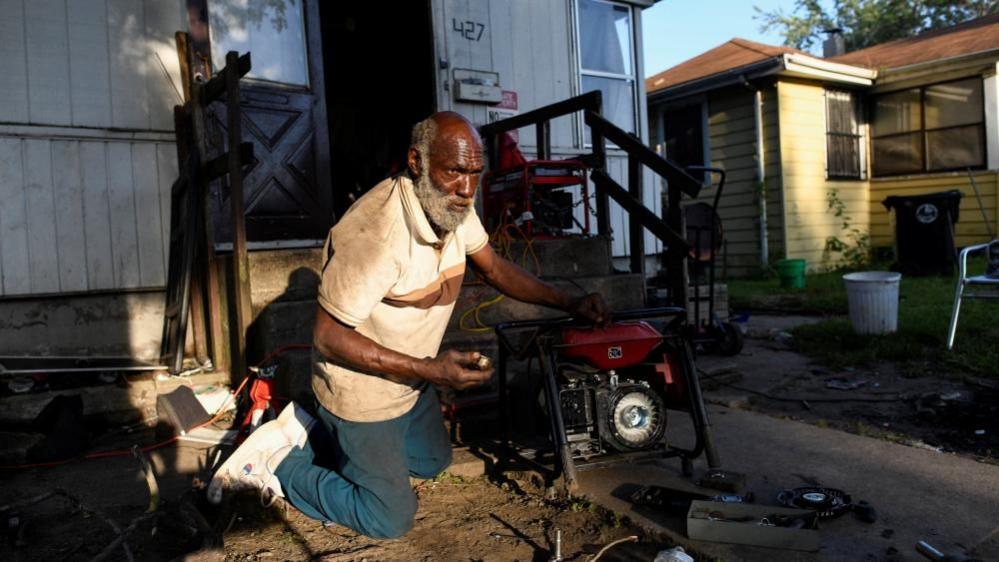
Officials warn that with climate change intensifying storms, such prolonged outages may become a more common plight. In the meantime, residents have adapted: some use generators, others drink ice water or shield themselves from the heat while waiting for the lights to come back on.