France wakes up bleary-eyed after the court’s verdict. On July 8, a panel in Paris upheld Marine Le Pen’s conviction of embezzlement, a decision that should have ended her political career. Yet Le Pen wasted no time: she announced via her network that she would run for president in 2027, and slid a colourful poster into circulation featuring the tricolour flag, her smiling face, and the slogan “For France – La Renaissance” (For France – The Rebirth). The message echoed her long‑standing promise to champion the so‑called “People” against a “globalist” elite led by President Emmanuel Macron.
Her campaign has stirred a sharp contrast. On one hand, some see her approach as a true “Trumpian gamble”; on the other hand, her supporters, many disillusioned with traditional parties, rally behind her as a voice for the “common citizen”. In an interview on French TV, Le Pen declared: “I am running for president – I will challenge the court and ask the French people to decide.” Critics argue that the prison sentence and the electronic tag could serve as a continual reminder of her conviction, potentially alienating moderate voters.
Despite the ruling, the appeal court shortened her ban to one year, leaving the choice to run for office up to Le Pen. She now faces a tight timeline: the decision from the highest court may arrive by spring, giving her a window to secure the presidency before the tag is enforced in the campaign that follows. Meanwhile, her party’s 30‑year‑old protégé, Jordan Bardella, is touted as the potential successor if Le Pen achieves presidential victory.
The stakes extend beyond French borders. France’s second‑largest economy and nuclear power is a decisive player on Europe’s geopolitical stage. A Le Pen presidency could shift France’s stance on NATO commitments and funding for Ukraine, unsettling both allies in Europe and global partners. As the political climate shifts, the world watches whether a figure who has survived two failed presidential bids—and two convictions—can yet transform French governance.
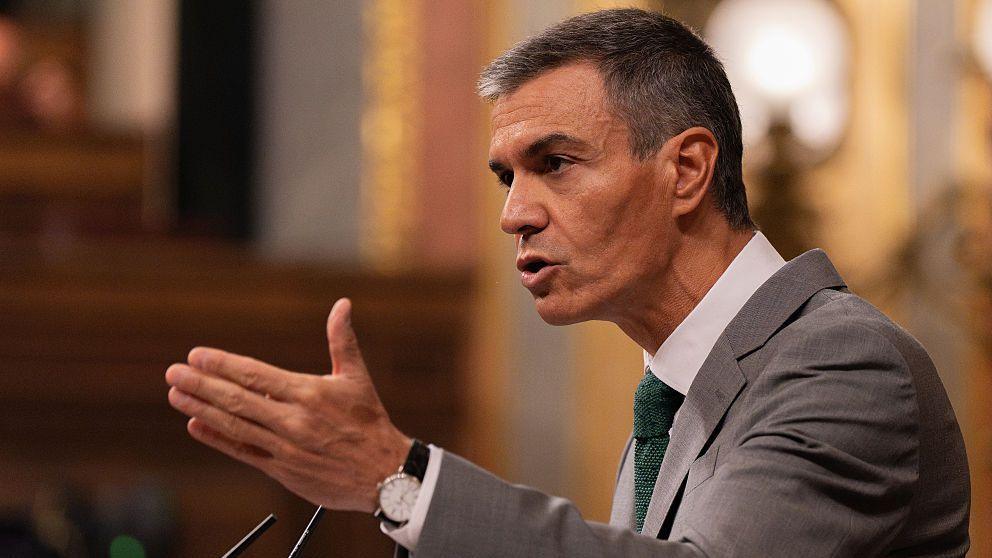
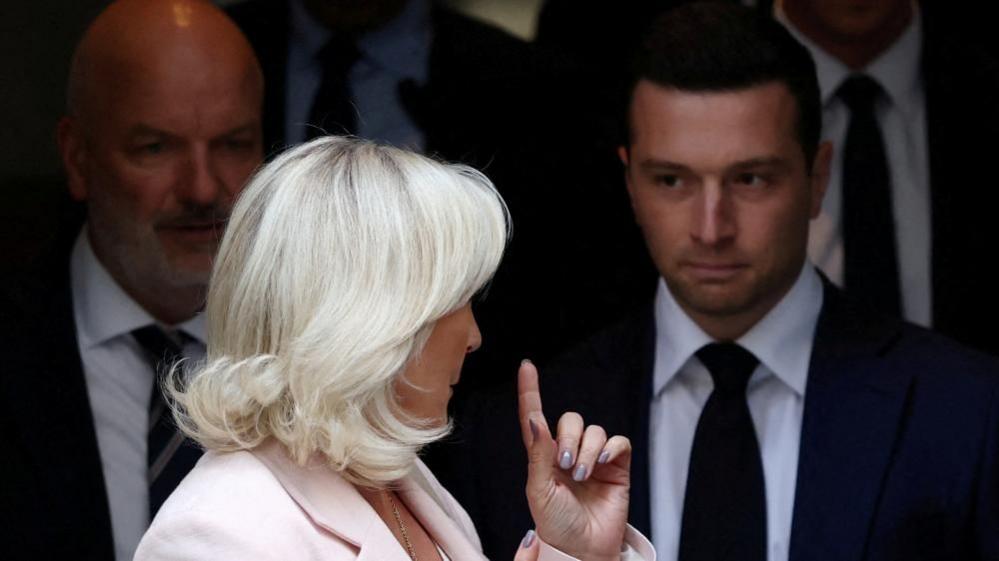
Images: Le Pen raises a finger while looking back at a man with a dark suit and tie and a white shirt – source: EPA; Le Pen leaves after a party meeting following the verdict – Reuters.