
In brief
As air pollution levels reach alarming heights, Delhi's primary schools will shift to online learning until further notice due to the dangerous smog situation affecting inhabitants' health.
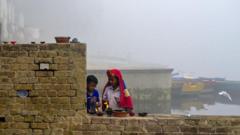
In a decisive move, all primary schools in Delhi have been ordered to close as officials grapple with worsening air quality conditions in the Indian capital. Chief Minister Atishi Marlena Singh took to social media platform X to communicate that classes will transition online until further notice, citing the hazardous smog that has descended upon the city.Delhi and its neighboring regions are currently facing severe pollution levels, which are classified as hazardous to human health. On Thursday, the concentration of fine particulate matter in the atmosphere soared to more than 50 times the threshold established by the World Health Organization (WHO). According to IQAir, a notable monitoring organization focused on air quality, the average levels of PM 2.5 particulate matter in Delhi reached 254 micrograms per cubic meter, starkly exceeding the WHO's recommended daily limit of 15.The annual winter season typically exacerbates smog in Delhi and surrounding northern states due to a combination of factors including falling temperatures, crop stubble burning, low wind speeds, and increased emissions from vehicles. The current surges in pollution can also lead to significant health risks, with fine particles having the ability to penetrate deeply into the lungs, impacting various organs and elevating the risk of cardiovascular and respiratory diseases. Extensive research has also indicated that such air pollution may adversely delay the developmental progress of young children.As of today, levels of larger particulate matter, specifically PM 10, have reached an alarming average of 495 micrograms per cubic meter—over ten times the daily safe limit outlined by the WHO. The air quality crisis extends beyond Delhi; neighboring cities such as Gurugram and Noida, as well as Chandigarh, also exhibit hazardous pollution levels.Residents have begun to report increased instances of eye irritation and respiratory difficulties, as personal experiences of poor air quality become more frequent. A recent study published in The Lancet revealed that approximately 7.2% of daily mortality in Delhi is attributable to fine particulate pollution.While authorities anticipate some easing of the air pollution in the coming days, they caution that conditions are still expected to remain at unhealthy levels. Delhi's government has already initiated various measures to address the pollution catastrophe, including the spraying of roads with dust suppressants and a ban on non-essential construction activities, alongside urging citizens to refrain from coal burning. However, many critics argue that these initiatives have not yielded effective results.The severe smog crisis has gained such intensity that it is now visible from space; recent satellite imagery shared by NASA illustrates the smog extending over northern India and spilling into Pakistan. Earlier this month, Lahore, a city in Pakistan with similar air quality challenges, also resorted to temporarily closing its primary schools due to pollution concerns. As the situation intensifies in the region, concerns regarding the public health implications of toxic air pollution remain high, drawing attention to the urgent need for more effective long-term solutions to mitigate this ongoing crisis.

