In brief
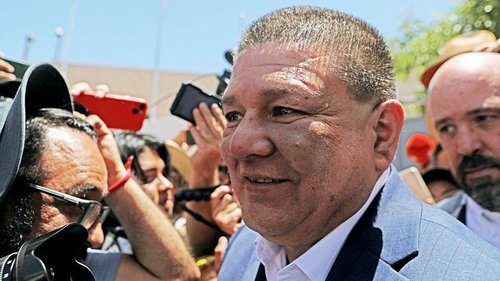
In a Brooklyn federal court, 76‑year‑old Ismael Zambada, co‑founder of the powerful Sinaloa Cartel, received a mandatory life sentence after pleading guilty to drug smuggling and conspiracy. The judge also imposed a $15 billion restitution order, reflecting profits from years of violent trafficking. Zambada, who was initially lured to the United States through an elaborate sting operation, apologized for the harm he caused and urged future generations to choose a different path. The case marks a symbolic end to a chapter in the trans‑border drug war, though the cartel’s internal conflict and drug flows likely continue unimpeded. The U.S. and Mexican authorities remain focused on dismantling the cartel’s remaining factions.
In a Brooklyn federal court, 76‑year‑old Ismael "El Mayo" Zambada, the long‑time co‑founder of the Sinaloa Cartel, was sentenced to life in prison after pleading guilty to drug smuggling and conspiracy charges. His plea, reached a year earlier, avoided the death penalty and triggered a mandatory life term under U.S. sentencing guidelines.
The judge also ordered him to pay $15 bn in restitution, a figure that represents the profits of the cartel’s decades of cocaine and fentanyl trafficking.
Zambada entered the U.S. two years ago after a sophisticated sting that tricked him into believing he was heading to northern Mexico to inspect clandestine airstrips. Instead, his plane landed in Texas and he was apprehended.
During the sentencing hearing, Zambada apologized through a Spanish translator, saying he was sorry for the harm he caused and for the example he set. He urged that “the violence must end” and called for a new path for young people caught in a cycle of crime or incarceration.
The restitution money is tied to the cachet of the Sinaloa Cartel, whose roots trace back to the late 1980s and whose members have sent enormous quantities of narcotics into the United States.
The court’s ruling does not change the ongoing internal strife in Sinaloa, where rival factions vie for control and violence has escalated. The government’s military and law‑enforcement operations in the region remain intense.
While Zambada’s removal may signal a symbolic end to a chapter in the cartel’s history, prosecutors warn that deprived inmates can still direct illicit activities from within prison walls, leading to a choice between a hospital‑level facility and higher‑security confinement.
Both the U.S. and Mexico continue to intensify pressure on criminal networks, and the international community watches how this case will shape future crackdowns on organized drug crime.