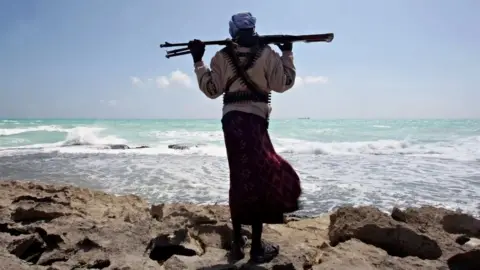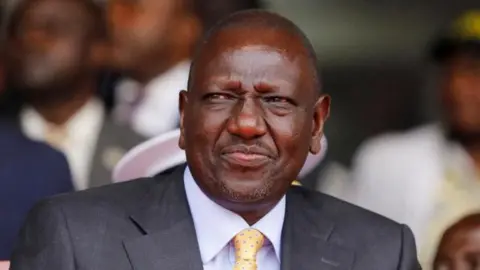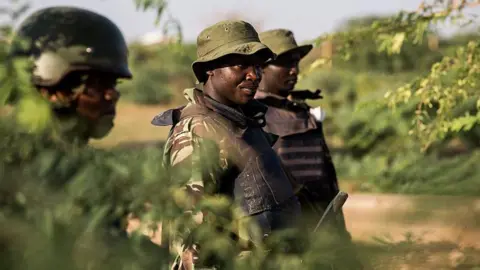
Kenya's border with Somalia will re-open in April, almost 15 years after it was closed due to attacks by the Islamist militant group al-Shabab, as announced by President William Ruto. The group, operating from Somalia, has conducted numerous deadly assaults in Kenya, including the tragic 2013 attack on a shopping center in Nairobi that claimed 67 lives and the 2015 attack on a university in Garissa resulting in 148 deaths.
While plans for the reopening were previously formulated in 2023, ongoing attacks delayed the initiation. President Ruto highlighted that only after extensive security assessments has the government decided to proceed with reopening two crossings, noting that a significant deployment of security forces will ensure safety remains uncompromised.
Concerns over the smuggling of illicit weapons and contraband goods have further complicated the border situation. President Ruto announced the reopening during a visit to Mandera, a northeastern border town with a substantial population of ethnic Somalis, emphasizing the necessity for connections between communities.
In his closing remarks, Ruto acknowledged the importance of the reopening for cross-border trade, stating, It is unacceptable that fellow Kenyans in Mandera remain cut off from their kin and neighbours in Somalia due to the prolonged closure of the Mandera Border Post. He called upon the residents to unite against al-Shabab, assuring them of Kenya's support in combating terrorism and promoting mutual prosperity.
While plans for the reopening were previously formulated in 2023, ongoing attacks delayed the initiation. President Ruto highlighted that only after extensive security assessments has the government decided to proceed with reopening two crossings, noting that a significant deployment of security forces will ensure safety remains uncompromised.
Concerns over the smuggling of illicit weapons and contraband goods have further complicated the border situation. President Ruto announced the reopening during a visit to Mandera, a northeastern border town with a substantial population of ethnic Somalis, emphasizing the necessity for connections between communities.
In his closing remarks, Ruto acknowledged the importance of the reopening for cross-border trade, stating, It is unacceptable that fellow Kenyans in Mandera remain cut off from their kin and neighbours in Somalia due to the prolonged closure of the Mandera Border Post. He called upon the residents to unite against al-Shabab, assuring them of Kenya's support in combating terrorism and promoting mutual prosperity.