
In brief
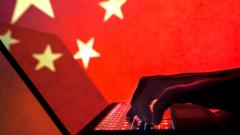
Recent hacks, most notably a breach of the US Department of the Treasury, have been attributed to Chinese state-sponsored cyber actors. The infiltration has sparked concern among US lawmakers regarding information security and prompted calls for action against these cyber threats.
Recent cyber-attacks on US agencies and companies have brought to light a troubling trend that appears to point fingers at the Chinese government. Reports reveal that several major breaches have occurred, most recently involving the US Department of the Treasury, which officials have labeled as a "major incident." This breach allowed hackers to gain access to employee workstations and some unclassified documents, prompting immediate scrutiny and concern at high government levels. The latest intrusion comes on the heels of a warning from the Federal Bureau of Investigation (FBI) and the Cybersecurity and Infrastructure Security Agency (CISA) regarding attempts to compromise two prominent US presidential campaigns. The hacks against the political campaigns were attributed to "actors affiliated with the People's Republic of China." Prior incidents this year included breaches at major telecommunications firms like AT&T and Verizon, with reports indicating that at least nine companies fell victim to these cyber incursions.US officials have laid the blame for these attacks on several distinct groups believed to be state-sponsored. Security firms have assigned various nicknames to these hacking collectives; for example, the group associated with telecommunications breaches is referred to as Salt Typhoon by Microsoft researchers. Other designations include Famous Sparrow, Ghost Emperor, and Earth Estrie. Authorities indicated that the group Volt Typhoon has played a role in targeting critical infrastructure for potential cyber disruptions.Formerly, seven Chinese nationals were charged with conducting a hacking operation known as Zirconium, which is alleged to have spanned over 14 years, targeting critics of the Chinese government, businesses, and political figures. Western governments also linked hacking operations to their electoral systems, highlighting a concerning trend of international cyber-attacks.The data collected in these sophisticated operations has reportedly been aimed at powerful American figures. Notable targets included the cell phones of President-elect Donald Trump, Vice-President-elect JD Vance, and various individuals involved with Vice-President Kamala Harris's campaign. Additionally, hackers accessed a law enforcement database that tracks wiretap targets, which experts say could reveal foreign operatives under surveillance.Lawmakers on both sides of the aisle have expressed their significant apprehensions regarding these incidents. Senator Mark Warner described the telecom hack as "the worst telecom hack in our nation's history." FBI Director Christopher Wray warned that China's cyber operations may constitute the "most significant cyber-espionage campaign in history." In response to these attacks, US authorities have taken action against China Telecom Americas, warning the company of potential national security issues. Meanwhile, the UK has imposed sanctions on individuals and entities tied to Chinese hacking activities.China has consistently denied any involvement in these cyber-attacks. A spokeswoman for China's foreign ministry labeled the accusations as "baseless" and lacking evidence, emphasizing that Beijing opposes hacking in any form. Experts assert that this growing trend of cyber aggression underscores a broader battle of strategic intelligence operations, as US and Western allies are compelled to reassess their cybersecurity frameworks in light of these credible threats.
