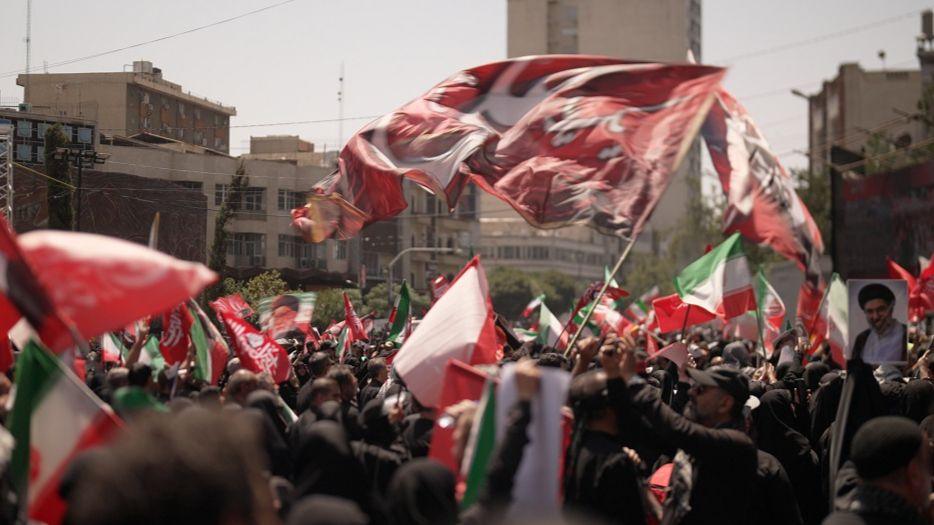
Resistance and revenge – Iran wanted to send a message with its farewell to Khamenei
The funeral of Ayatollah Ali Khamenei unfolded as a three‑stage affair that began with a 10‑kilometre procession through Tehran, slow as it moved past millions of mourners who lined the route. The event was deliberately choreographed to showcase national unity and send a rebuke to its enemies.
While the spectacle could have united the populace given the country’s recent hardships—war and inflation pushing 80% and protests in January—many chose to stay away from the marches, angry at the Supreme Leader’s role in the security crackdown that cost thousands of lives.
Across the streets, loyalists chanted the mantle slogans of “death to America” and “death to Israel,” while the most powerful images were broadcast to the world. The procession carried five caskets, one each for the deceased and four family survivors, all emblazoned with the green, red and white of the national flag.
Within the crowds, opponents of the gradual détente with the United States made public appeals to the West. AI‑generated slogans such as “Our revenge is inevitable” and “They will pay. Hard.” echoed from phones in slogans shouted in the barrage of posters that featured President Trump’s portrait. The rhetoric made the funeral outside Tehran a stark reminder of the legacy of the 1979 revolution, even as Iran now faces a new era under the 56‑year‑old, Iraq‑born leader “Mojtaba Khamanei”.
Yet a smaller voice spoke of a different form of “revolution.” Two women who had stood at the front of the mourners whispered that the real voices were those that erupted in the streets in January, not those amplified by a single orchestrated march. The clash between those voices is a sign of the uncertainty still alive in the republic.
Final burial will take place in Mashhad on Thursday, at the Imam Reza Shrine, the highest religious site for Iranian Shia. From that point the lazily winding procession is expected to keep the message of resilience and revenge alive for weeks, while the nation wrestles with negotiations for the end of sanctions and the re‑launch of its economy.
*Reporting from Tehran, Lyse Doucet was limited by restrictions on using this material on the BBC Persian Service.