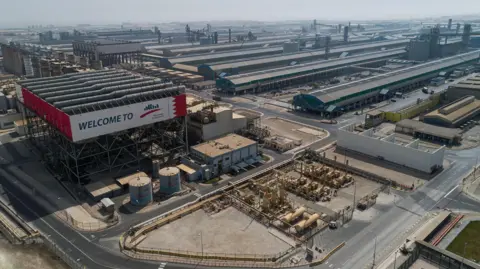
Gulf nations are grappling with a series of attacks as the US-Israel war against Iran stretches into its fifth week, raising tensions across the region. The United Arab Emirates (UAE) reported injuries resulting from an Iranian strike on a major aluminium plant in Abu Dhabi. The operator, Emirates Global Aluminium, detailed significant damage caused by the attack.
In Bahrain, state-controlled Aluminium Bahrain confirmed that two employees were wounded following an assault on one of the largest aluminium smelting facilities globally.
In the background of these attacks, Yemen's Iran-backed Houthi movement has also entered the fray, launching missile barrages against Israeli military sites while threatening to disrupt shipping in the Red Sea, which may further impact economic stability and energy prices.
The conflict has already caused oil and gas prices to rise as Iran effectively closed the Strait of Hormuz, a pivotal shipping channel for global energy flows. Should the Houthis choose to target shipping lanes, particularly as they did in response to the recent violence in Gaza, energy costs could spike even higher.
Simultaneously, Oman is investigating drone strikes that wounded a foreign worker at its southern port of Salalah, which were described as 'cowardly attacks'. In Kuwait, the defence ministry reported considerable damage to its airport's radar system from a drone assault.
Amidst the turmoil, tensions surged with accusations of Israeli airstrikes on Iranian steel production sites, and the Islamic Revolutionary Guard Corps (IRGC) pledging to retaliate against US and Israeli interests.
As the situation evolves, both economic and human costs are growing, and regional stability hangs in the balance amidst this turbulent conflict.