In brief
Abhijeet Dipke, the founder of India’s Cockroach Janta Party, was arrested in Delhi ahead of a protest demanding the resignation of the country’s chief election commissioner. The protest saw hundreds of supporters gather outside Central Park, waving Indian flags amid a heavy police presence. Police sealed the park and surrounded Dipke as he tried to leave his home, forcibly escorting him into a vehicle. Earlier this month the police had also blocked the party’s leader’s flight and detained its key activists. The party condemned the arrests as political intimidation, saying it would continue its campaign under the tricolor flag.
India’s youth‑led Cockroach Janta Party (CJP) founder Abhijeet Dipke was detained by Delhi police on Friday night as a protest demanding the resignation of Chief Election Commissioner Gyanesh Kumar unfolded on Connaught Place.
Hundreds of CJP supporters gathered outside Central Park, waving Indian flags and chanting slogans even as the police sealed the park and deployed a large force of officers and paramilitary personnel. The police swarmed Dipke’s home hours before the rally, and an Instagram broadcast showed him confronting officers who had warned him not to hold the march. When Dipke tried to leave, police surrounded him and forcibly put him into a police vehicle, detaining him for the second time in less than a week.
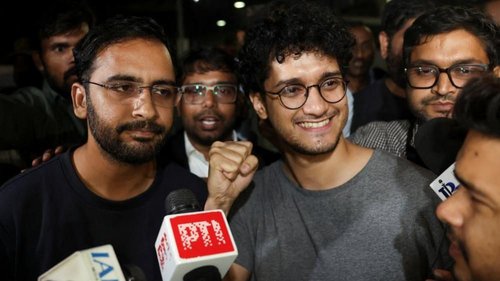
Earlier, the police had boarded the founder’s plane on Saturday, preventing him from reaching a planned demonstration. Key CJP leaders Saurav Das and Ashutosh Ranka were also detained last weekend and later jailed for five days after returning to the protest site at Jantar Mantar, which authorities had removed from the list of approved venues. The CJP says the arrests are an attempt to silence its message and insists they will continue their campaigns underground.
At the protest, police largely held back at first but began using force as darkness fell, pushing some protesters into a bus and injuring at least one person. Several journalists marched with the demonstrators, but police and media numbers far exceeded the number of protestors. The BBC and Reuters reported that Neha Bora, a student‑activist from the All India Students’ Association, was among those detained.
The CJP’s actions began in May when its founder embraced a derogatory term used by a former chief justice for unemployed young Indians, turning it into a rallying cry for employment and political reform. The movement quickly grew, drawing thousands to protest leaked exam papers in July and forcing the resignation of the education minister. Since then, the party has turned its focus to the SIR (Special Intensive Revision) of voter rolls, demanding the resignation of the election commissioner over alleged irregularities.
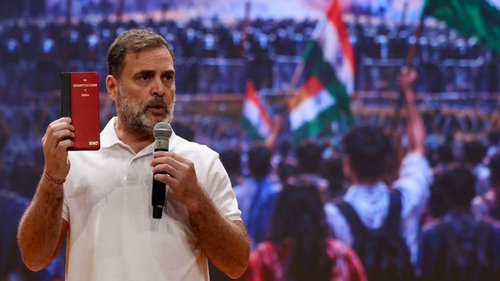
Opposition politicians such as Rahul Gandhi have joined the protests, with Gandhi and other lawmakers detained while attempting to march to the Election Commission’s headquarters. President Droupadi Murmu has been called upon by the opposition, and protests have also reached the Supreme Court. Home Minister Amit Shah defended the commission’s independence and accused the opposition of spreading falsehoods about the voter‑list revision.
With its three key leaders in custody, the CJP says it has a plan to sustain its protests through small, dispersed groups. A spokesperson said, “If the top three continue to stay behind bars, we will continue to protest peacefully.”
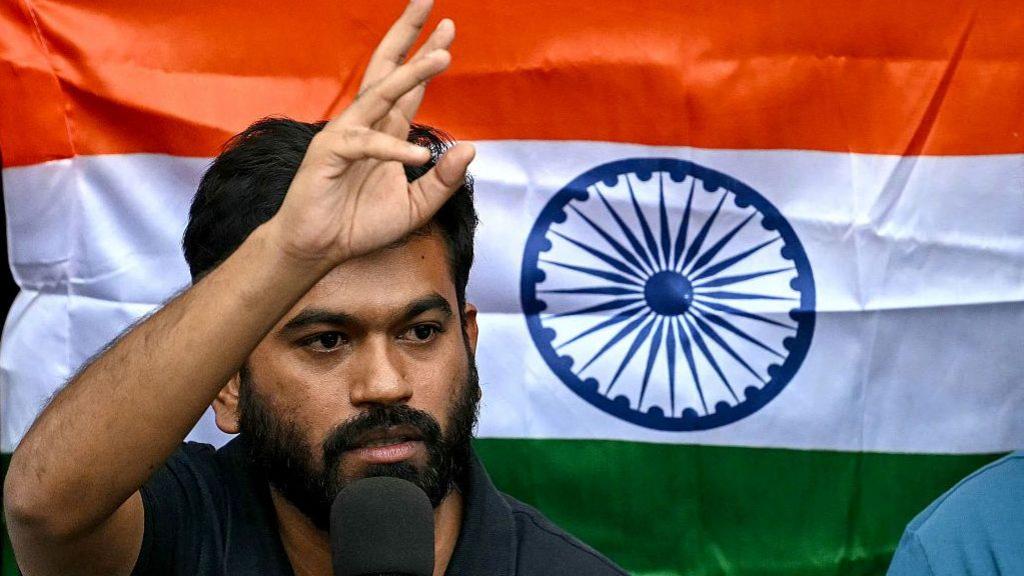
Abhijeet Dipke, founder of the Cockroach Janta Party, speaking during a press conference in New Delhi on 15 October 2026.