
In brief
The return of air strikes in Dahieh, Beirut's southern suburb, has heightened fears of an impending conflict among schools and residents amid an already tense atmosphere.
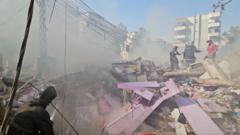
In Beirut’s southern suburb of Dahieh, a bustling Friday afternoon turned tragic as chaos erupted following a warning from the Israel Defense Forces (IDF) about an impending airstrike targeting a Hezbollah facility. The alert sent parents rushing to evacuate their children from local schools, while residents hastily fled the area, all filled with palpable fear and distress.“It was a scene of total chaos,” recounted Ahmad Alama, director of St Georges School, one of the educational institutions listed in the IDF warning. The school was in close proximity to a building that was later bombed for allegedly serving as a storage site for Hezbollah drones. “We attempted to manage the situation, but it was overwhelming.”This strike marked the first assault in Dahieh since a ceasefire concluded hostilities between Israel and Hezbollah in November. Amid this development arose new rocket firings from southern Lebanon, which Israel intercepted while the other fell short, escalating the tensions further. In response to the strikes, Lebanese president Joseph Aoun condemned the attack as a violation of the ceasefire agreement.“Thoughts of war faded with the ceasefire, but the fear is very much alive,” Mr. Alama expressed. Despite a ceasefire being in place, Israeli operations targeting Hezbollah links have persisted, igniting fears of an impending war once again.Dahieh schools like St Georges have been compelled to adapt. Under the leadership of Ahmad Alama, the institution has established emergency evacuation protocols, communicated regularly with parents, and conducted evacuation drills to ensure all staff and students are prepared in case of further attacks.The psychological toll on students, parents, and faculty is apparent. While many schools faced closure during the height of the conflict, ensuring safety now poses new challenges as families grapple with the terrifying reality of nearby destruction and resilience routines. Despite contemplating reducing extracurricular activities to compensate for lost learning, the school administrators concluded that students need healthy outlets to cope with the situation.As a visible reminder of past destruction, many neighborhoods continue to bear the scars of last year’s conflict, with extensive building damages marking Dahieh’s landscape. Over 346 buildings were destroyed during the strikes, leaving remnants of rubble and debris that now surround daily life. The return of shops and cafés is met with apprehension, as revisiting these spaces triggers painful memories of the recent past.Deeper concerns linger for schools like Burj High School, which suffered damages themselves, limiting student enrollment drastically. The post-war climate is receiving mixed reactions as bombing memories clash with a longing for normalcy, all against a troubled backdrop of destruction.As residents continue to faithfully display resilience and defiance in the face of destruction, there is an ambiguous weight of fear in their everyday lives. It remains uncertain what assistance schools and families in the area might receive, with long-term rebuilding solutions hanging in limbo amidst the political turmoil surrounding Hezbollah’s disarmament and extensive international conditions for aid. As the remnants of the past remain in plain sight, anxiety lingers on the horizon as families and educational institutions steady themselves for uncertain futures while grappling with memories of recent conflict.


